
WATER PROBLEMS · WESTERN PA & NORTHEAST OHIO
You can’t see, smell, or taste it. It shows up as a line on a lab report saying the well is open to the surface somewhere, and there is a short, orderly list of what to do about it. Here is how to read the result, and what fixes it.
Serving our communities since 1967
- A lab report with “present” or “positive” beside total coliform or E. coli
- A well that went under water, or a cap that has been off, loose, cracked, or buried
- A new-to-you home with a well and no test on file
- A neighbor’s well testing positive, or work done on yours, the pump, or nearby ground
- Stomach illness in the house that comes and goes with no other explanation
Symptoms overlap, and more than one can be true at once. A water test settles it.
Schedule a water testWHAT IT IS
A Result, Not a Verdict.
Here Is How to Read It.
“Pure” water does not exist. All natural water contains some gases and minerals and is likely to contain some microbial organisms, and most water bacteria are harmless; many are beneficial. As a private well owner you control your own supply, and with that comes the responsibility of knowing what is in it, because no agency tests it for you.
Coliform bacteria originate in soil and vegetation and in the intestinal tract of warm-blooded animals. They are used as the indicator organism because they are easy to culture and because their presence means a route exists from the surface into the well: runoff from woodlands, pastures, and feedlots, septic tanks and sewage, animals wild or domestic. Most coliforms are harmless residents of soil. E. coli, the most common fecal coliform, is the one that signals recent fecal contamination, and some strains are pathogens; that finding should be taken very seriously. A report distinguishes the two, and they are treated differently.
A bacteria test tells you what the laboratory detected in the sample it received. It does not tell you how the organisms got there: the well itself, the plumbing, the sampling, or a condition that has since changed. That is why a positive result is a starting point for questions rather than a conclusion, and why the most common mistake after one is deciding on a cause and a remedy before anyone has looked at the well.
How to confirm it
Testing annually for total coliform, E. coli, and nitrate is ordinary private-well practice, with more frequent testing after flooding, well work, or a noticeable change. A positive result is confirmed with a second sample, collected by the lab’s instructions and delivered the same day. With Chatfield’s water test, the bacteria results come back first.
- AbsentTotal coliform: absentThis is the only pass. Keep the report, retest next year, and sooner after flooding, well work, or a change in taste or smell.
- PresentTotal coliform present, E. coli absentSoil and vegetation organisms, mostly harmless in themselves, and a sign the well is open to surface water somewhere. Confirm with a second sample, inspect the wellhead, disinfect, retest.
- E. coliE. coli presentThis signals recent fecal contamination. Ask the lab or the health department about interim use before anything else; the usual advice is to boil or use another source until a retest clears it.
- No resultRust-colored slime, nothing on the reportIron bacteria: a nuisance biofilm that fouls the well and the softener, not a health organism. It calls for a well cleaning rather than a disinfection system.The guide
- Absent is the only passThere is no acceptable count. The EPA’s Total Coliform Rule treats any detection as a result to act on, and E. coli as an acute one. Nothing you can see, smell, or taste stands in for the test.
- Nitrate with itBacteria and nitrate share their sources (septic systems, livestock, surface runoff), so the annual panel reports both, and both matter more with an infant in the house.
- WHAT SANITATION CHANGES
- UV: bacteria neutralized at the point of entry, no chemicals, no change in taste
- Chlorine injection with retention: contact time for heavier contamination or turbid water
- A sealed cap and casing above grade, so it does not come back
WHAT TO DO RIGHT NOW
Before the Second Sample
Comes Back.
A positive result calls for a prompt, calm response. Do these four things, in this order, while you wait for the confirmation and any guidance.
- 01
Ask about interim use
The most time-sensitive question goes to the lab that produced the result or the local health authority: what should the household do with the water right now, for drinking and cooking, and for how long. Ask whether a confirmation sample is advised and how to collect it.
- 02
Record recent events
Write down any flooding, well or pump work, nearby excavation, plumbing work, long power interruption, stretch when the property was empty, or new or serviced treatment system, with dates. Do not draw a line from any one event to the result; a professional may, or may not.
- 03
Look at the wellhead, from the outside
Is the casing intact and upright, the cap present and secure, the ground sloping away from it rather than toward it? Take a dated photo. Do not remove the cap, loosen fittings, or reach into the casing; a well can include energized equipment.
- 04
Don’t shock the well yet
A one-time chlorination is a recognized service, and it may clear the result for a while. If a condition is letting bacteria in, it does not change that condition. The right order is testing, then inspection, then a recommendation, rather than a treatment applied first and questions asked afterward.
Keep the original report, the confirmation result, notes on what was inspected or serviced, and the dates. A professional looking at a well with three years of results behind it has far more to work with than one looking at a single sheet.
WHERE THEY COME FROM
If the Well Is Open,
It Will Happen Again.
Given time and a route, and soil and rock provide plenty of both, bacteria will migrate into an aquifer and take up housekeeping there. The nonnative organisms of health concern, coliform bacteria and protozoa such as Giardia and Cryptosporidium, are most likely introduced from the surface, and the surface gets in through a short list of doors.
- The cap. Missing, cracked, loose, or not the vermin-proof kind. Insects, mice, and rainwater all use the same gap.
- The casing. A wellhead below grade, in a pit, or under a flood line lets surface water wash straight in. The usual recommendation is to extend it 18 to 24 inches above grade with the ground sloping away.
- The neighborhood. Coliform bacteria are the indicator for sources like a septic system uphill, a pasture or feedlot, a fertilized field, or a stream in flood, and those sources are why nitrate rides on the same test.
- The sample. An unclean bottle, a garden hose, an aerator left on. A confirmation sample, collected properly, is how a lab result becomes a well result.
Iron bacteria are a different matter. Better described as iron biofouling, the rust-colored slime in a toilet tank or a softener is a biofilm of living and dead bacteria and embedded iron particles. It is natural and usually harmless, a nuisance rather than a health organism, and the usual cause of iron buildup in wells and pipes. It is not a lab result, and it calls for a well cleaning rather than a disinfection system. The slime guide covers it.
THE FIX
Close the Door,
Then Disinfect.
The fix follows a set order. Confirm the result, inspect the well, plumbing, and installation area, correct the entry point, disinfect, and retest. When results and inspection call for ongoing sanitation, there are two established approaches, and the right one depends on what was found. If necessary, that means a new well away from the source of contamination.
- LUMINOR UV · CHLORINE INJECTION
Two ways to keep it from coming back.
A Luminor UV system treats water at the point of entry with ultraviolet light, adding no chemicals and changing no taste. A chlorine injection system with retention injects a measured dose and holds the water in a retention tank for contact time, the approach for heavier contamination or water with higher turbidity. Either one goes in after testing, an assessment, and a quote, and is verified once installed.
How water sanitation works - THE WELL SIDE
Cap, casing, and a proper cleaning.
A sanitary vermin-proof cap, a casing extended above grade, a sealed pit, and a well cleaning that removes the debris and organic material a shock treatment leaves behind. The door gets closed before the lamp goes on, or the lamp is doing the well’s job forever.
Well service and cleaning
A LITTLE CLARITY
Bacteria Questions.
Straight Answers.
Will coliform bacteria make us sick?
Maybe, maybe not. Most coliforms are harmless residents of soil and will not make people sick. Some strains of E. coli, the most common fecal coliform bacterium, may be pathogens, and some found in food have been lethal, which is why their presence should be taken very seriously. Total coliform and E. coli are different findings on the report and are treated differently; read what the report actually says and ask what that particular result indicates.
If my water is clear and smells okay, is it safe?
You cannot see, smell, or taste unsafe bacteria or protozoa. They can only be detected using tests designed for that purpose, which is why the annual bacteria test is ordinary private-well practice. It cuts both ways: clear water is not evidence that a positive result was a fluke, and an odor or a stain is usually iron, sulfur, or sediment rather than bacteria. It is still a good idea to take your nose seriously and have the water tested.
If I have bacteria in my well, where do they come from?
Many types of bacteria are native or adapted to saturated sediments and rock, and are present in significant numbers in most water-supply aquifers, even deep formations. Coliform bacteria and the protozoa of health concern, such as Giardia and Cryptosporidium, are most likely introduced from the surface: runoff from woodlands, pastures, and feedlots, septic tanks and sewage, and animals, wild or domestic, finding a route into the well through a damaged cap, a casing that ends below grade, or a flood.
What is the “iron bacteria” problem?
It is better described as iron biofouling: biofilms of living and dead bacteria, their sheaths, stalks, and secretions, and embedded iron particles. They are natural and usually harmless, sometimes even useful as a preliminary iron filter in the well. As a nuisance it is the usual cause of iron buildup in wells and pipes and of the rust-colored slime in the toilet tank, and it calls for a well cleaning rather than a disinfection system. It is not a lab result and not a health organism.
Does shock chlorination fix bacteria for good?
Not if the well is still open to the surface. Chatfield’s own well-cleaning guidance makes the point: some owners view chlorination as a cure-all, and while it may temporarily address a result, it can leave behind debris and accumulated organic material, and a condition that is letting bacteria in is unchanged. Fix the entry point, disinfect, retest, and add ongoing sanitation when the results and the inspection call for it.
What’s the best way to maintain a good water supply?
Have the water tested annually for bacteria, nitrate, and anything else of concern to you, by a qualified laboratory, even if you do not perceive a change. Inspect the wellhead each year, keep the cap sealed and the casing above grade, keep chemicals, fuel, and vehicles away from it, and keep every report. If you obtain drinking water from your own well, you alone are responsible for assuring that it is safe. Call (724) 588-2652 to schedule a water test.
Talk with the Chatfield team.
(724) 588-2652A LITTLE KNOWLEDGE GOES A LONG WAY
Know Your Water.
 WATER PROBLEMS
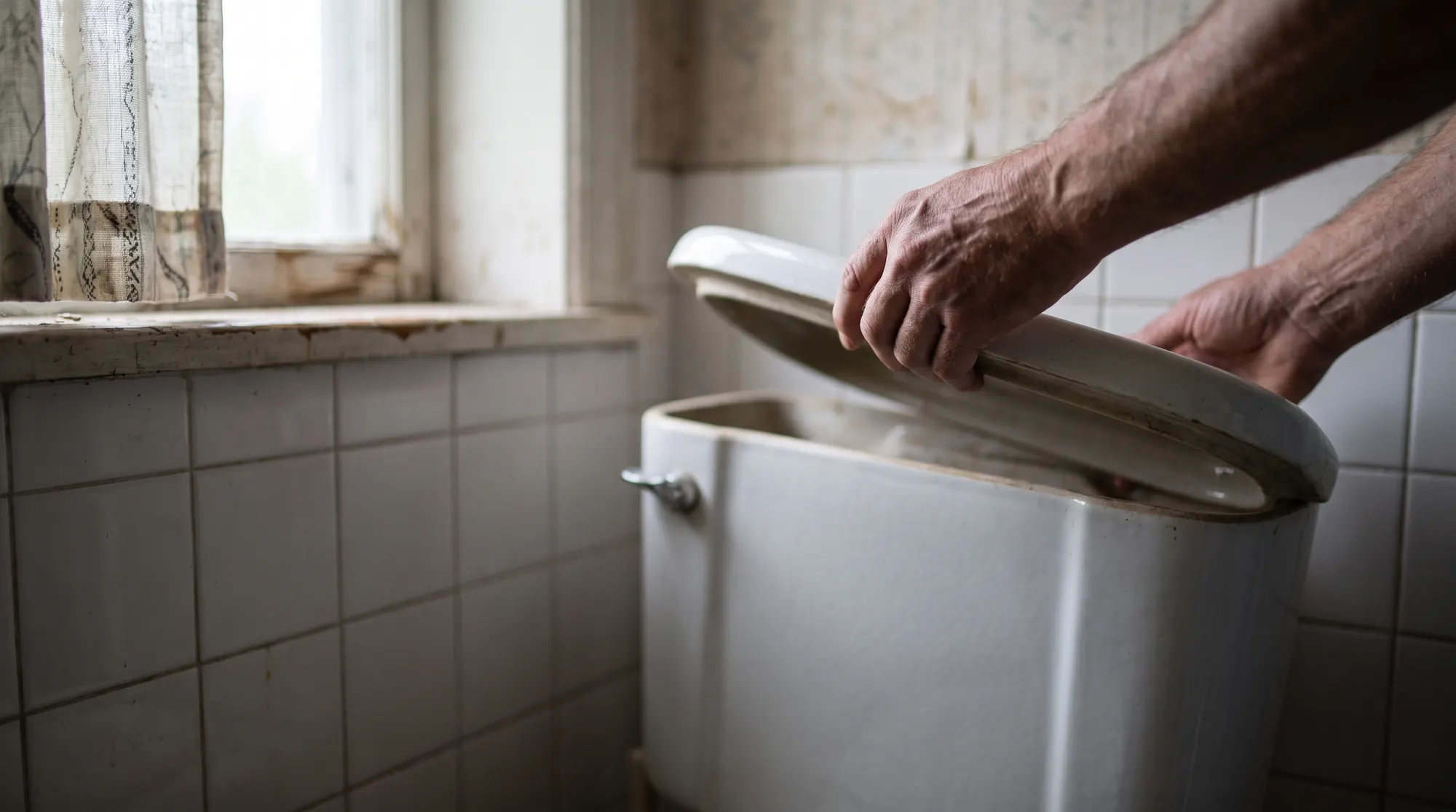
Slime in the toilet tank.
Iron bacteria, the nuisance kind: what the biofilm is and why it takes a cleaning rather than a lamp.
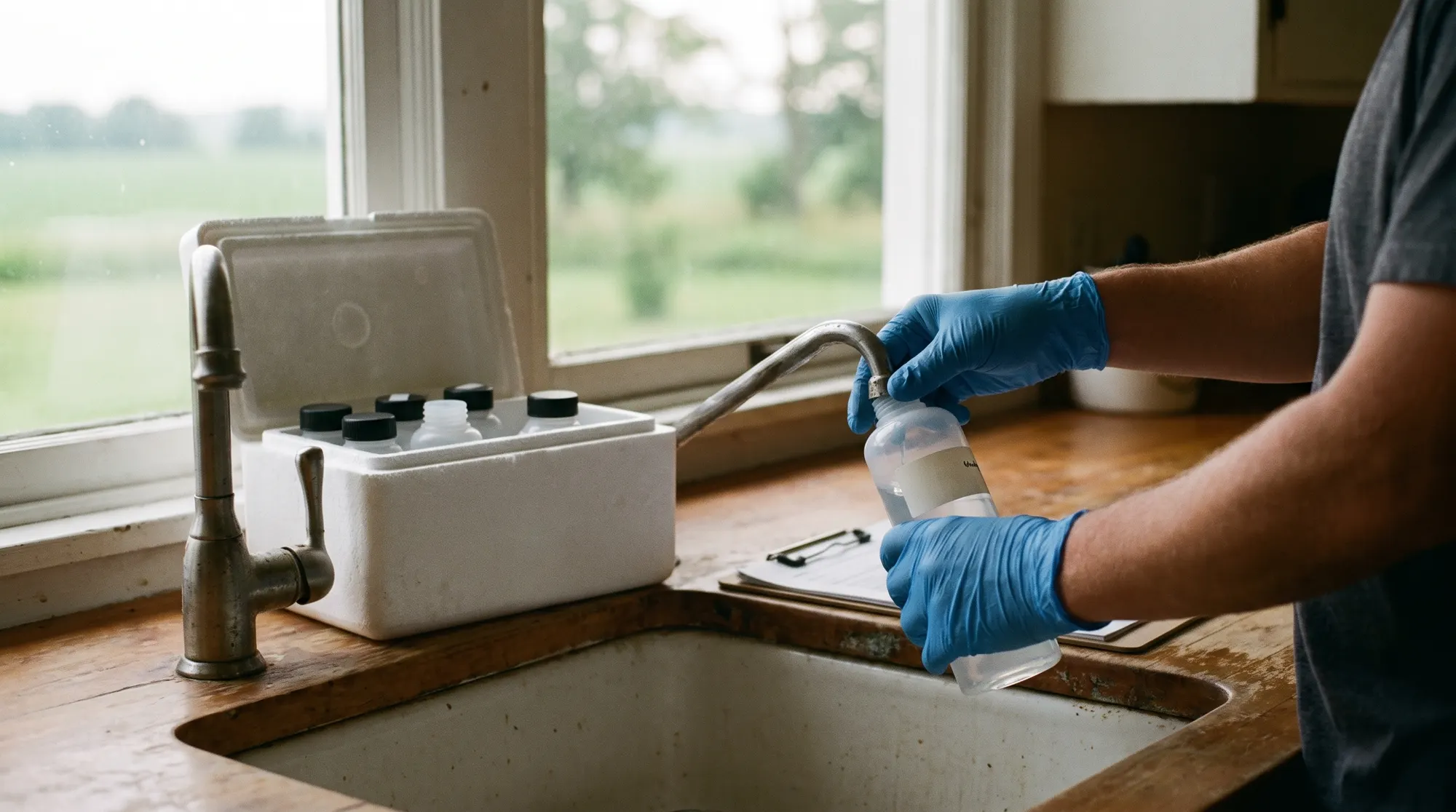 WATER TESTING
Water testing, explained.
What a test measures, what the results mean, and what happens next.
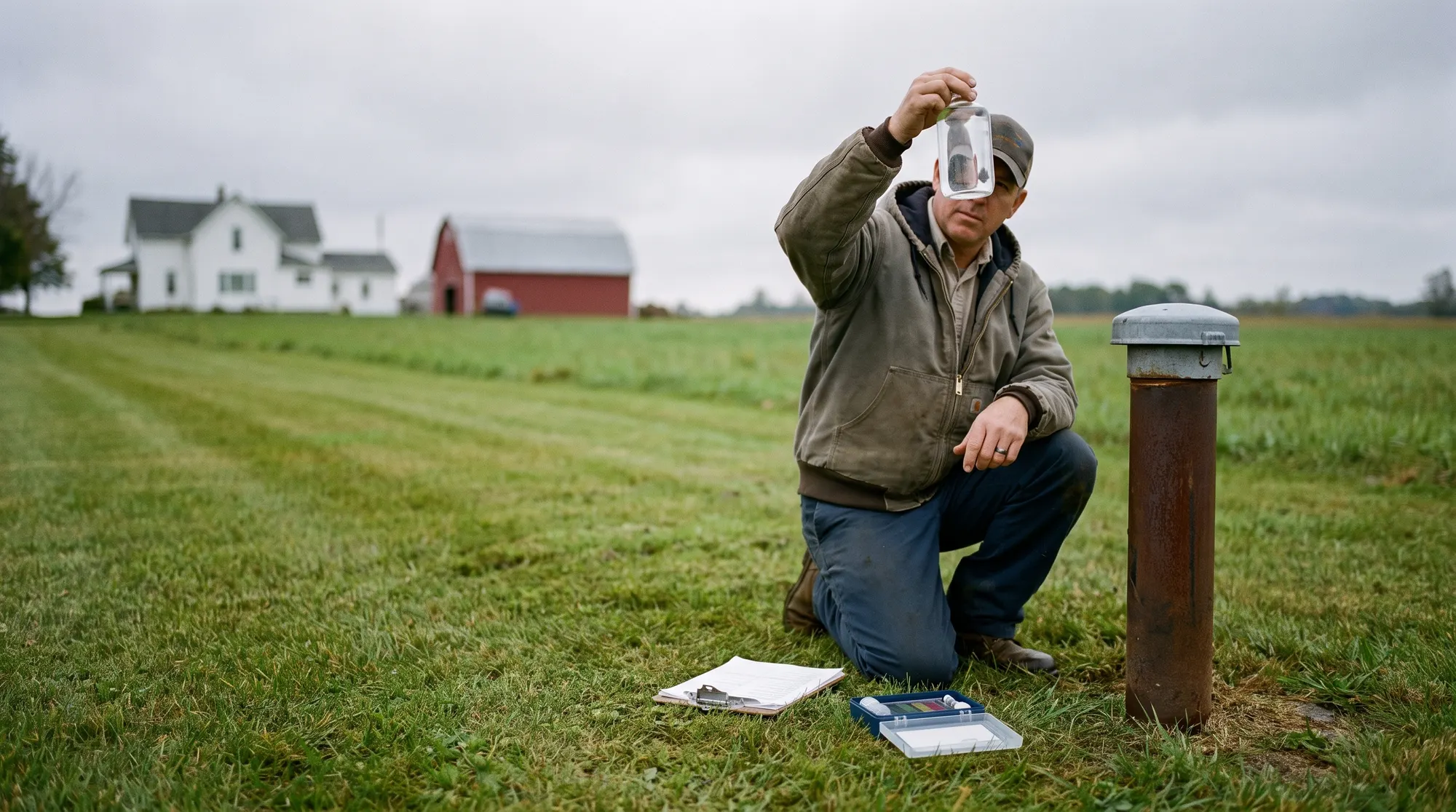 WELL MAINTENANCE
Well service and cleaning.
Caps, casing extensions, chlorination, and the annual checkup that keeps the door closed.

YOUR NEXT STEP
Test It.
Then Close the Door.
A water test, collected by the lab’s instructions, tells you whether the well is open to the surface. From there, the fix is the wellhead first and the sanitation system second, specific to what was found.