
WATER PROBLEMS · WESTERN PA & NORTHEAST OHIO
Tired of tap water that tastes like a swimming pool? You are not imagining it. The utility adds chlorine to keep the supply safe, and by the time it reaches your house its job is done. What is left is the taste, the smell, and the dry skin. The CityLux takes it out at the door.
Serving our communities since 1967
- A pool or bleach smell when a tap runs, strongest in a hot shower
- Coffee, tea, and anything cooked in the water tasting faintly chemical
- Dry, itchy skin and dull hair after showering
- White residue on dishes and glassware
- A pitcher filter you keep replacing, and bottled water you keep buying
Symptoms overlap, and more than one can be true at once. A water test settles it.
Schedule a water testWHAT IT IS
The Plant’s Job Is Done
by the Time It Reaches You.
Municipal water systems use chlorine, or chloramine, as a disinfectant: to kill bacteria during treatment, and to keep killing them as the water travels through miles of pipe to your home. It is effective, and it is required. The amount reaching a particular house varies by season, by distance from the treatment plant, and by local water conditions, and what is left at your tap is a residual that has finished its work and now only affects the taste, the smell, and your skin and hair.
The two disinfectants behave differently. Chlorine is the sharp, pool-like smell; it fades if water stands overnight, and ordinary carbon removes it. Chloramine, chlorine bonded with ammonia, is flatter, lasts far longer in the pipe, does not fade or boil off, and takes catalytic carbon to remove. Both form byproducts on the way, chiefly trihalomethanes, which the EPA limits separately. City water in our region reaches homes through the cities, boroughs, and the townships their mains extend into; Pennsylvania American Water alone serves about 19,500 customers in the City of Butler and the surrounding area.
How to confirm it
A test measures free and total chlorine at your tap, and the utility’s annual water quality report, mailed or posted each year, names the disinfectant it runs. Bring it. The same visit measures hardness, because city water is softer than well water on average and not exempt; the scale on the kettle is the same chemistry. Chatfield’s water test covers both.
The sharp, pool-like smell, strongest close to the treatment plant and in summer. It fades if a pitcher stands overnight, and ordinary carbon removes it.
Chlorine bonded with ammonia: flatter smell, far longer-lasting. It does not fade on standing or boil off, and it takes catalytic carbon and more contact time to remove.
Your utility’s annual water quality report, mailed or posted each year, names the disinfectant. Bring it to the test.
- 4 mg/LThe EPA maximum residual disinfectant level for chlorine and for chloramine at the tap. Most systems run well under it; the taste starts far below it.
- 80 µg/LTotal trihalomethanes, the byproducts chlorine forms on the way to your house. The CityLux’s catalytic carbon takes them out with the chlorine.
- WHAT CITYLUX CHANGES
- No chemical taste or smell at any tap or shower
- Coffee, tea, and cooking taste like the water, not the plant
- Softened water too: less scale on glassware and fixtures
- No more pitcher cartridges; every gallon treated at the point of entry
WHOLE HOME, NOT A PITCHER
Why a Pitcher Filter
Doesn’t Get There.
Pitcher filters and faucet attachments treat a fraction of the water, need constant replacement, and cannot handle the volume a household actually uses. The CityLux treats every gallon that enters the house, at the point of entry.
- 01
A pitcher treats a fraction
The water you pour through it, and nothing else. Showers, baths, laundry, the dishwasher, and every other tap in the house still run straight from the main.
- 02
Cartridges cannot keep up
They need constant replacement, and they cannot handle the volume a household actually uses; a cartridge past its life passes chlorine through untouched.
- 03
Chloramine needs more than a pitcher
Chloramine does not fade on standing or boil off. Removing it takes catalytic carbon and more contact time than any pitcher or faucet attachment provides.
- 04
The point of entry gets every gallon
One system where the municipal line enters the house treats the kitchen, the bathrooms, the laundry, everything. One system, whole-home results.
Once installed, every tap in the home delivers water without the chemical taste or smell. Showers feel better, coffee tastes better, and the bottled water stops.
WHAT IT DOES
It’s Not Just
the Taste.
The taste is what gets noticed at the glass. The rest of the house meets the chlorine differently.
- The shower. Hot water releases chlorine as vapor, which is why the smell is strongest there, and why skin comes out dry and hair dull. A shower is where most of a household’s water contact happens.
- Coffee, tea, and cooking. Chlorine reacts with what it meets. Coffee tastes flat or medicinal, tea goes cloudy, and stock and pasta water carry the note into the food.
- Dishes and glassware. The white residue on dishes is hardness and dried disinfectant together. The CityLux softens the water and takes out the chlorine, so one unit addresses both.
- Everything with a rubber seal. Chlorine and chloramine age the gaskets and seals in faucets, ice makers, and appliances; chloramine is also harmful to aquarium fish and cannot be used untreated in dialysis, which is why utilities publish which one they run.
THE FIX
CityLux:
Every Gallon, at the Door.
The Chatfield Water Systems CityLux is designed for homes on municipal water: one whole-home unit that softens the water and removes chlorine, chloramine, and their byproducts from the entire supply, with a micron filter for sediment. One of the most straightforward installations there is, and same-day service is typically available.
- CITYLUX
Point-of-entry treatment, sized to your house.
We test the water for chlorine and chloramine, assess the point where the municipal line enters the house, recommend the CityLux configuration for your water use, and provide a clear quote. Its catalytic carbon handles chloramine as well as chlorine.
How chlorine removal works - HARD CITY WATER TOO?
The same unit softens it.
Many municipal supplies in our region are moderately hard to hard, and the spots on the glassware and the scale in the kettle say so. The CityLux is a water softener as well, so the hardness comes out with the chlorine.
City water treatment
A LITTLE CLARITY
City Water Questions.
Straight Answers.
How do I remove chlorine from my tap water?
For a whole home, chlorine is treated at the point of entry so that every fixture delivers water without the taste and smell. Chatfield addresses over-chlorinated municipal water with the CityLux system, selecting the configuration after reviewing your water and the installation area. Pitcher filters and letting water stand may affect taste at a single glass but do not treat the water reaching showers and appliances.
Why does my city water smell or taste like chlorine?
Chlorine is used by municipal systems as a disinfectant, at the plant and through the miles of pipe between the plant and your home, and the amount reaching a particular house varies by season, distance from the plant, and local conditions. Too much chlorine can affect taste, smell, and even skin sensitivity. It is one of the contaminants Chatfield’s systems are built to address, alongside VOCs, PFAS, arsenic, and bacteria.
Does boiling or letting water stand remove chlorine?
Chlorine, yes: it leaves water that stands uncovered overnight and boils off in a few minutes. Chloramine, no: the ammonia bond holds it in the water through both. If your water still smells the next morning, or the utility’s annual report says chloramine, the pitcher-and-patience approach will not work, and catalytic carbon is needed.
Is chlorine in tap water harmful?
At the levels a utility runs, no; the EPA sets a maximum residual disinfectant level of 4 mg/L for chlorine and for chloramine, and disinfection is what keeps a municipal supply safe. What the CityLux addresses is everything short of safety: the taste and smell, the dry skin and hair, the flat coffee, and the disinfection byproducts, which the EPA limits separately at 80 µg/L for total trihalomethanes.
Do I need chlorine removal if I am on a private well?
Usually this is a municipal water question, since private wells are not chlorinated by a utility. However, chlorine can be part of a well system where injection is used as a sanitation or sulfur treatment, and in those cases a carbon filter is part of the design. Testing and a review of your existing equipment determine what applies to your property.
How do I find out what is in my water?
Chatfield tests your water on-site or through a certified lab, assesses the installation area, reviews the results with you, and provides a clear quote before installing anything. For city water, bring the utility’s annual water quality report as well; it names the disinfectant and reports the averages. Call (724) 588-2652 to schedule a water test.
Talk with the Chatfield team.
(724) 588-2652A LITTLE KNOWLEDGE GOES A LONG WAY
Know Your Water.
 WATER PROBLEMS
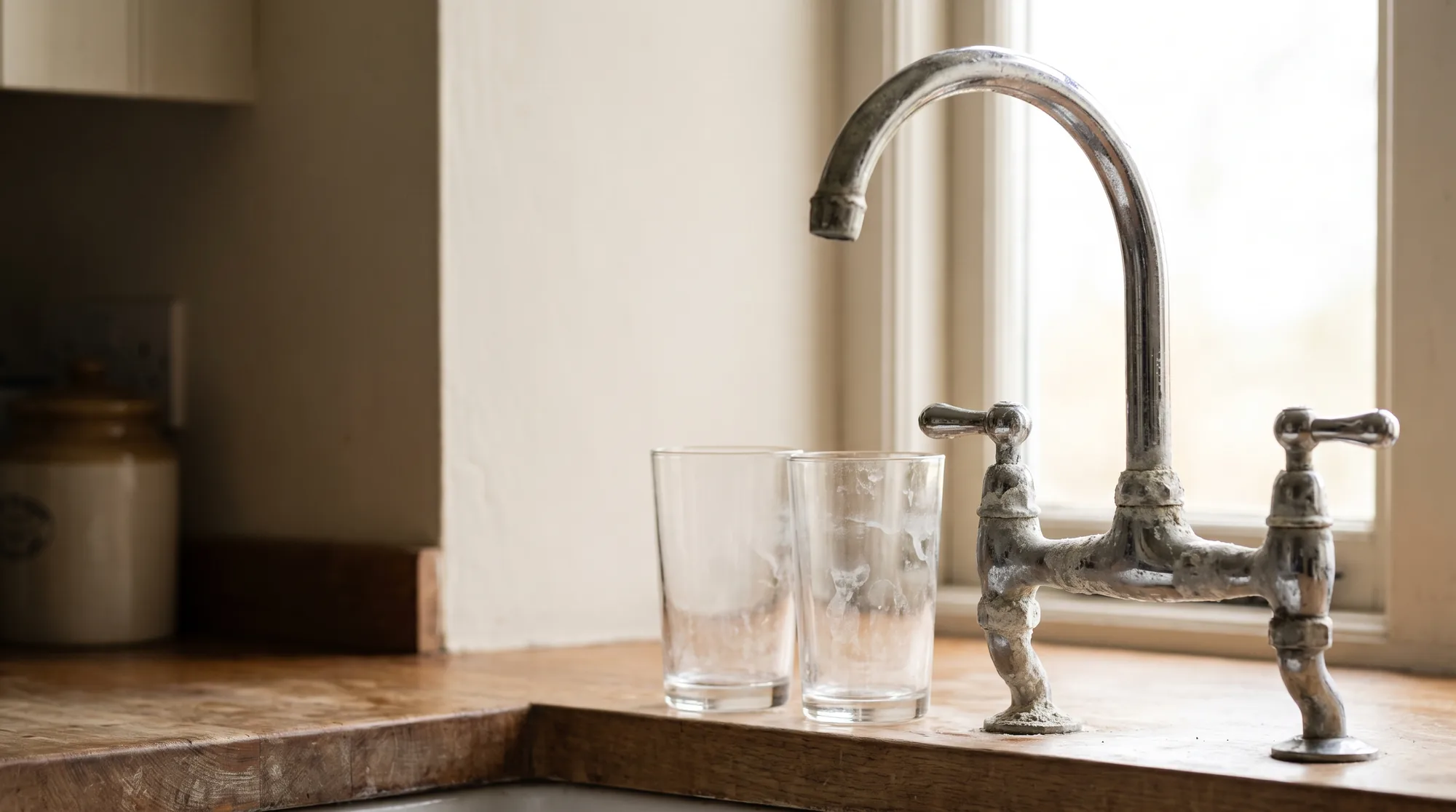
Do you have hard water?
City water is softer on average and not exempt; the scale on the kettle is the same chemistry.
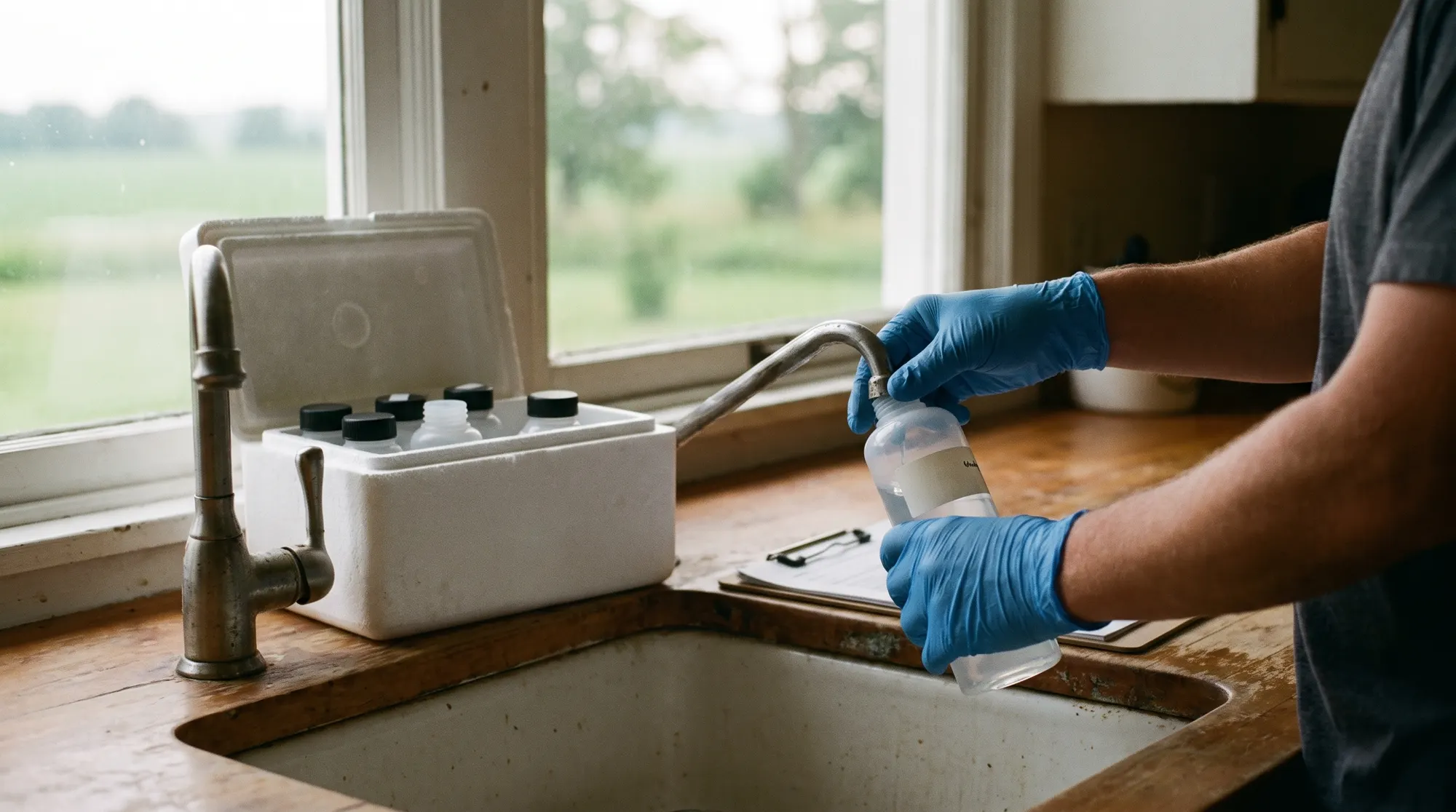 WATER TESTING
Water testing, explained.
What a test measures, what the results mean, and what happens next.
 WATER TREATMENT
City water treatment.
Sediment, hardness, chlorine and chloramine: what a municipal supply still brings to the tap.
YOUR NEXT STEP
Ditch the Taste.
Keep the Safety.
A water test measures the chlorine at your tap and the hardness with it. From there, the CityLux is configured to your utility’s disinfectant and your household, not to a guess.