

WATER TREATMENT · WESTERN PA & NORTHEAST OHIO
Aerators that keep clogging, water with a gray cast, grit in the glass. The Alluvium Sediment System captures sand, silt, and clay at the point of entry, before they reach a single fixture.
Serving our communities since 1967
Sand settles in seconds and clogs aerators. Silt settles in minutes and grays the water. Clay stays suspended and clouds it. The Alluvium captures all three, and the filter is sized to the finest particle the test and the aerator show.
- WHAT FILTRATION CHANGES
- Aerators and shower heads stop clogging
- Clear water in the glass, first draw of the morning included
- Valves, the water heater, and appliances stop grinding on grit
IS THIS YOUR WATER?
Why Is My Water Cloudy, Gray,
or Clogging My Faucets?
A common issue for homes on well water in Western Pennsylvania and Eastern Ohio, and it gets worse over time as particles accumulate in the plumbing and appliances.
HOW PARTICLE FILTRATION WORKS
Caught at the Door,
Not in the Dishwasher.
A whole-home particle filter is the simplest piece of equipment in the sequence and the one everything else depends on.
- 01
Grit comes in
Water from the well arrives carrying sand, silt, and clay from the formation, the casing, or a well screen that has seen better days.
- 02
The media holds it
The Alluvium captures the particles as the water passes through, down to the finest grain the test found; the filter is sized to that grain, not to a guess.
- 03
Clean water continues
Clear water goes on to the water heater, the washing machine, the dishwasher, and every faucet, with nothing left to grind on valves and screens.
- 04
Self-cleaning, on schedule
On schedule the system flushes what it has caught to drain and returns to service, so the household is not changing a clogged cartridge every month.
SEDIMENT · PARTICLE FILTRATION
Sediment and Particle Filtration
for Well Water.
If your faucet aerators keep clogging, your water has a gray or cloudy appearance, or you’re noticing gritty particles when you fill a glass, sediment in your water supply is the problem.
What causes sediment in well water
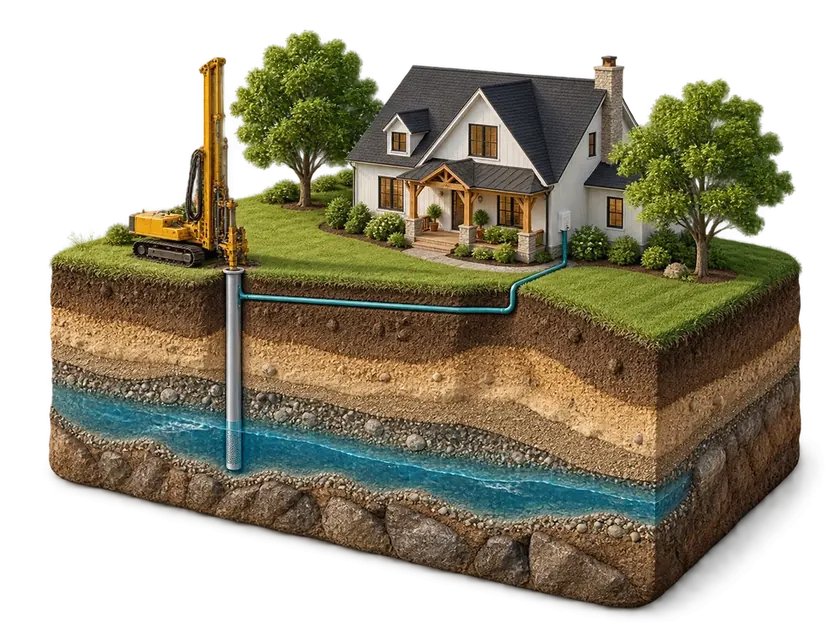
Sediment enters your water from the geological formations surrounding your well. Sand, silt, clay, and other fine particles can make their way into your water supply through the well casing, especially in older wells or areas with softer rock formations. A worn well screen, a pump set too close to the bottom, or an aquifer stirred by heavy rain or nearby construction can do the same; when the well is the source, the well gets fixed first, or the filter clogs on the well’s behalf.
The fix: the Chatfield Water Systems Alluvium Sediment System
After we investigate the source and severity of your sediment issue, we typically install our Alluvium Sediment System. The Alluvium is a whole-home particle filtration system that captures sand, silt, clay, and other debris before they reach your plumbing, fixtures, and appliances. It protects everything downstream: your water heater, washing machine, dishwasher, and every faucet in your home.
Protect your plumbing and appliances
Sediment doesn’t just make your water look bad; it causes real damage. Every particle that flows through your pipes is grinding against valves, building up in your water heater, and shortening the life of your appliances. The Alluvium stops that damage at the source, saving you money on repairs and replacements down the road.
Serving Western PA and Eastern OH
We solve sediment problems for homeowners across ten counties:
HOW WE SOLVE YOUR SEDIMENT PROBLEM
Test First.
Then Size the Filter.
Seeing particles, discolored water, or clogged fixtures? Call or fill out the form to get started.
- 01
Test your water
We analyze your water to identify the type and volume of sediment and check for any additional water quality issues.
- 02
Assess your space
We evaluate your home’s plumbing setup and installation area.
- 03
Review results & quote
The right Alluvium Sediment System configuration recommended, with a clear quote.
- 04
Install
The Alluvium is one of our most commonly stocked solutions; same-day installation is available in most cases.
A LITTLE CLARITY
Sediment Filtration Questions.
Straight Answers.
How do you fix sediment in well water?
After investigating the source and severity, Chatfield typically installs the Alluvium Sediment System, a whole-home particle filtration system that captures sand, silt, clay, and debris before they reach plumbing, fixtures, and appliances. It protects everything downstream, including the water heater, washing machine, and dishwasher. It is one of the most commonly stocked solutions, so same-day installation is often available.
Why is my well water suddenly filled with sediment?
A sudden change is worth reporting rather than diagnosing yourself. Sediment enters from the geological formations around a well, and sand, silt, and clay can reach the water supply through the casing, particularly in older wells or softer rock formations. A recent change may also follow well work, plumbing work, heavy rain, or nearby excavation. Note when it began and what else changed.
What are the signs of sediment in my water?
Clogged faucet aerators and showerheads, gray or cloudy water, a gritty or sandy texture, sediment collecting in the bottom of the water heater, reduced water pressure over time, and premature wear on washing machine valves and dishwasher components. The visible part is often minor compared with what accumulates in plumbing and appliances.
Will a sediment filter fix cloudy water?
Sometimes, but not always, which is why testing comes first. Cloudiness can come from suspended particles, but it can also have other explanations, such as air from the pump or dissolved iron oxidizing in the glass, and a filter aimed at the wrong issue will not resolve it. Chatfield analyzes the water to identify the type and volume of sediment and to check for additional water quality issues before recommending a configuration.
What size sediment filter do I need?
The one sized to the finest particle in your water. Sand, silt, and clay are different sizes, and a filter rated for sand passes silt straight through while one rated for clay clogs early on sand. The test, and what the aerator caught, decide the rating, and the Alluvium is configured to it.
Does the sediment filter go before the softener?
Yes, always. Sediment filtration goes first in any whole-home sequence, because grit that reaches a softener, an iron system, or a UV lamp keeps that equipment from doing its own job. When the well itself is the source, a screen replacement, a pump reset, or a well cleaning comes before the filter.
Talk with the Chatfield team.
(724) 588-2652A LITTLE KNOWLEDGE GOES A LONG WAY
Know Your Water.
 WATER PROBLEMS
Cloudy or gritty well water.
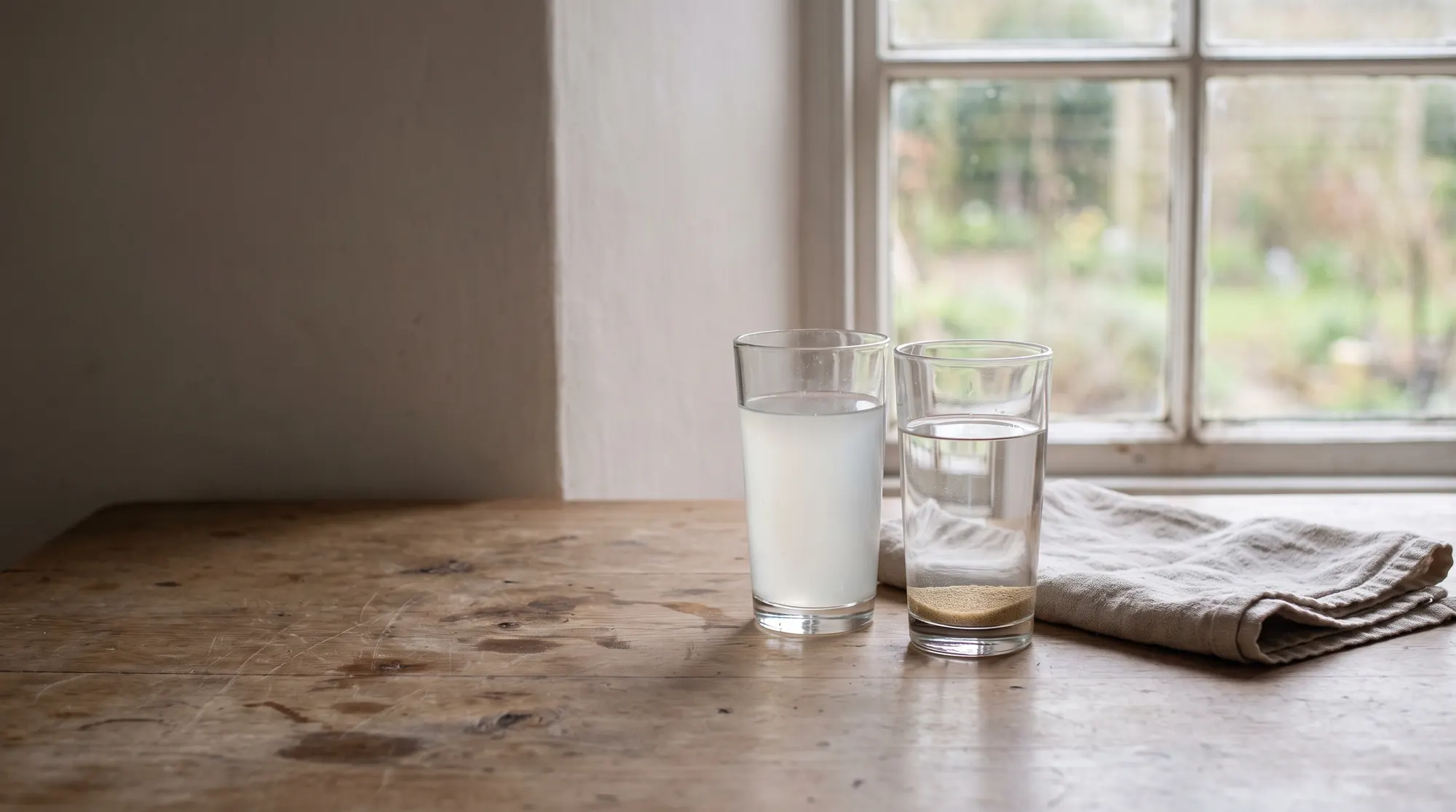
The glass test that sorts air from sediment from dissolved metals, and the five ways grit gets in.
 WELL MAINTENANCE
Well service and cleaning.
When the grit is the well’s fault: screens, pump depth, and cleaning a well that has silted in.
 WATER TESTING
Water testing, explained.
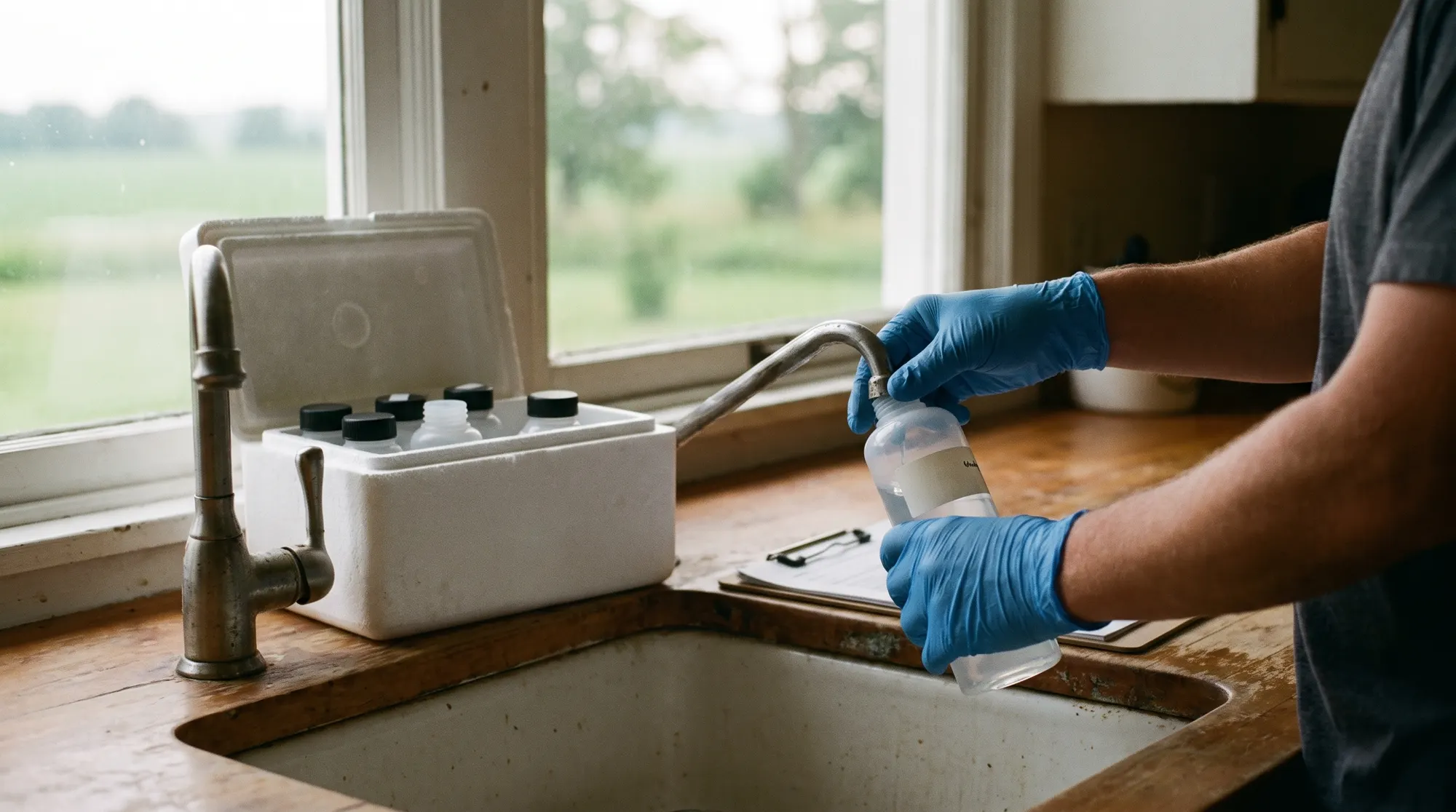
What a test measures, what the results mean, and what happens next.
YOUR NEXT STEP
Clear Water Starts
with a Test.
Call or fill out the form to schedule your water test. We’ll identify the particle, and the Alluvium is often on the truck the same day.