

WATER TREATMENT · WHAT IT COSTS
A whole-house system is a set of treatment steps, and the price follows how many there are. Here is how the test sets that count, what each piece of equipment adds, and what a quote should show you.
Serving our communities since 1967
Whole-house filtration is not one product. It is the equipment your test calls for, sized to your household and lined up so nothing fouls what comes after it. The quote lists that equipment line by line.
Schedule a water test- 01How many systemsIron, sulfur, sediment, bacteria, chlorine, and hardness mostly need their own equipment, and the test shows which ones your water has. The number of systems is the biggest lever on the price.One problem, one tank; three problems, a sequence
- 02Flow and householdA whole-house system has to keep up with the taps running at once. Tank size and media volume follow the flow the house needs and the people using it.Full pressure with two showers and the washer going
- 03Injection or mediaSulfur and bacteria often take an injection system, a feed pump dosing chlorine or peroxide with a contact tank, ahead of a filter. Iron and sediment usually take a media tank alone.The chemistry the test calls for, not a guess
- The testThe list the quote is built from: what is in the water, and at what level.
- Each system, sizedEvery tank, feed pump, lamp, or softener as its own line, matched to the test and the flow, with its manual and warranty.
- The installPlumbing at the point of entry, drain, bypass, power where a lamp or a pump needs it, and the first cycle watched.
- WHAT THE MONEY CHANGES
- Stains, smells, grit, and scale stop at the point of entry, not at one tap
- Every fixture and appliance sees the same clean water
- Nothing fouls the equipment after it, so the whole line lasts
WHAT CAN BE ON THE QUOTE
The Equipment,
and What Puts Each Piece There.
Most homes need one or two of these. A few need most of them. The test shows which, and nothing goes on the quote without a reading behind it.
HOW THE NUMBER IS BUILT
Test, Order,
Size, Install.
Four steps, and the quote is the total. The first one, the test, decides the other three.
- 01
Start with the test
We read iron, manganese, hardness, pH, and sulfur at the tap, and bacteria through the lab. What the test finds becomes the equipment list, and nothing is quoted before it.
- 02
Put the equipment in order
Sediment and iron go first, then injection and carbon for sulfur, the softener after them, and UV after everything. Reverse osmosis goes at the sink if the dissolved contaminants call for it.
- 03
Size each one to the flow
A house with three bathrooms needs bigger tanks and more media than a cottage, and a UV lamp is rated for a flow. Undersized equipment loses pressure or lets water through untreated.
- 04
Add the install, and that is the number
The install covers plumbing at the point of entry, a drain for backwash, power for a lamp or a feed pump, a bypass, and the space it all fits in. The quote is the equipment plus the install.
WHOLE-HOUSE FILTRATION COST
What Moves the Price of a
Whole-House System.
“Whole-house water filter” covers a dozen different installations. A single sediment tank on city water and a four-part setup on a farm well with iron, sulfur, and hardness are both whole-house filtration. That is why the price range is too wide to be useful until the test narrows it to your water. Here is what does the narrowing.
How many systems
Each problem takes its own equipment: a sediment filter for grit, the FerronX for iron and manganese, injection with the CataPure for sulfur, a softener for hardness, a UV lamp for bacteria. On city water, the CityLux softens and removes chlorine in one unit. The test lists which your water needs, and that is the quote. Most homes here need one or two.
The order, which is the design
Sediment and iron go first, so nothing fouls what follows. Injection and carbon come next. The softener goes after them, so its resin sees clean water, and UV goes last, so the lamp sees clear water and treats every gallon. Reverse osmosis, where the dissolved contaminants call for it, goes at the sink rather than the point of entry, and has its own cost page. A quote that puts a softener ahead of an iron filter is no bargain, because that resin bed will have a short life.
Flow, and the size of everything
A whole-house system has to keep up with the house. Two showers, a washer, and a hose at once is a flow, and every tank, lamp, and feed pump is sized to it. A cottage and a five-bedroom farmhouse on identical water get different quotes because their tanks are different sizes. Undersize the system and you lose pressure or let water through untreated; the test and the household together set the size.
Injection versus media
Some problems come out with a tank of media the water passes through; iron and sediment usually do. Others need chemistry first: sulfur and some bacteria take a feed pump dosing chlorine or peroxide, a contact tank to give it time, and a carbon filter to take the residual out. An injection system is more equipment and more upkeep, which is why the smell at the tap costs more to fix than the stain in the tub.
The install, and the upkeep
The install means plumbing at the point of entry, a drain for backwash, power for a lamp or a feed pump, a bypass, and room for a row of tanks in the right order. Then there is the running cost, which the quote should list system by system: backwash water, chemical for an injection system, a UV lamp once a year, salt for the softener, media over the years. Financing through GreenSky covers treatment work; the financing page explains how to apply.
Questions to ask about any quote
- Which reading on the test put each system on this quote?
- What order will they stand in, and why?
- Is each system sized to our flow and our household?
- Is anything left off that the test found, and what happens if it stays off?
- What does each system cost to run, and when is its first service?
- Which manuals and warranties come with it?
HOW A QUOTE HAPPENS
Test First.
Then the Sequence.
The water test is the first line of every quote. The equipment follows what it finds.
- 01
Test your water
We test at the tap or through the lab for the minerals, the pH, the smell, and the bacteria. The equipment list follows the results.
- 02
Assess your space
Where the water enters, the drain, the power, and the room a sequence of tanks needs, in the order they have to stand.
- 03
Review results & quote
Each system as a line with the reading that put it there, plus the install and the upkeep each one needs, explained before anything is scheduled.
- 04
Install & verify
Installed by the Chatfield crew in sequence, each system run through its first cycle, the water checked at the tap, and the maintenance dates written down.
A LITTLE CLARITY
Filtration Cost Questions.
Straight Answers.
How much does a whole-house water filtration system cost?
It depends on how many systems your water needs, which is why there is no single number. A well with iron alone needs one tank. A well with iron, sulfur, and hardness needs three systems in a set order, and a coliform result adds a UV lamp. The water test gives the list, and the quote follows it line by line, each system with the reading that put it there.
Why is there no price on this page?
Because “whole-house filtration” is a sequence, not a product, and the sequence is different for every well. Publishing a range would be wrong for most homes in one direction or the other. We would rather test your water and show you the quote built from it than make you guess where in a range your house falls.
What makes one quote higher than another?
Count the systems and read what each is for. A quote with more of them is not padded if the test found more problems. A quote with fewer is not cheaper if it leaves iron in front of a softener or skips the lamp a coliform result calls for. Ask which reading justifies each line, and what happens to the rest if one is left out.
Which system is the expensive one?
Injection systems, because they are two pieces: a feed pump and a contact tank ahead of a carbon filter, plus the chemical they dose. Media tanks for iron and sediment are simpler. A UV unit sits in between and needs power and a new lamp each year. Your test results decide which of them you need.
What does a whole-house system cost to run?
Each system has its own upkeep: backwash water for media tanks, chlorine or peroxide for an injection system, a UV lamp once a year, salt for a softener, media top-ups over the years. The quote lists them, and the annual well checkup covers the service. Against that sits what untreated water costs in stained laundry, failed water heaters, and appliances that die early.
Can I add equipment later instead of all at once?
Yes, if the layout is planned for it from the start. The order matters, so a setup planned as three systems with two installed now leaves the right space and connections for the third. What does not work is adding a softener to water that still has iron in it. The iron filter ahead of it has to come first.
Talk with the Chatfield team.
(724) 588-2652A LITTLE KNOWLEDGE GOES A LONG WAY
Know Your Water.
 WATER TREATMENT
Whole-home water filtration.
The equipment, the order it goes in, and which problem each piece takes out.
 WATER TREATMENT
Water softener cost.
The last piece in most whole-home setups, and what moves its price.
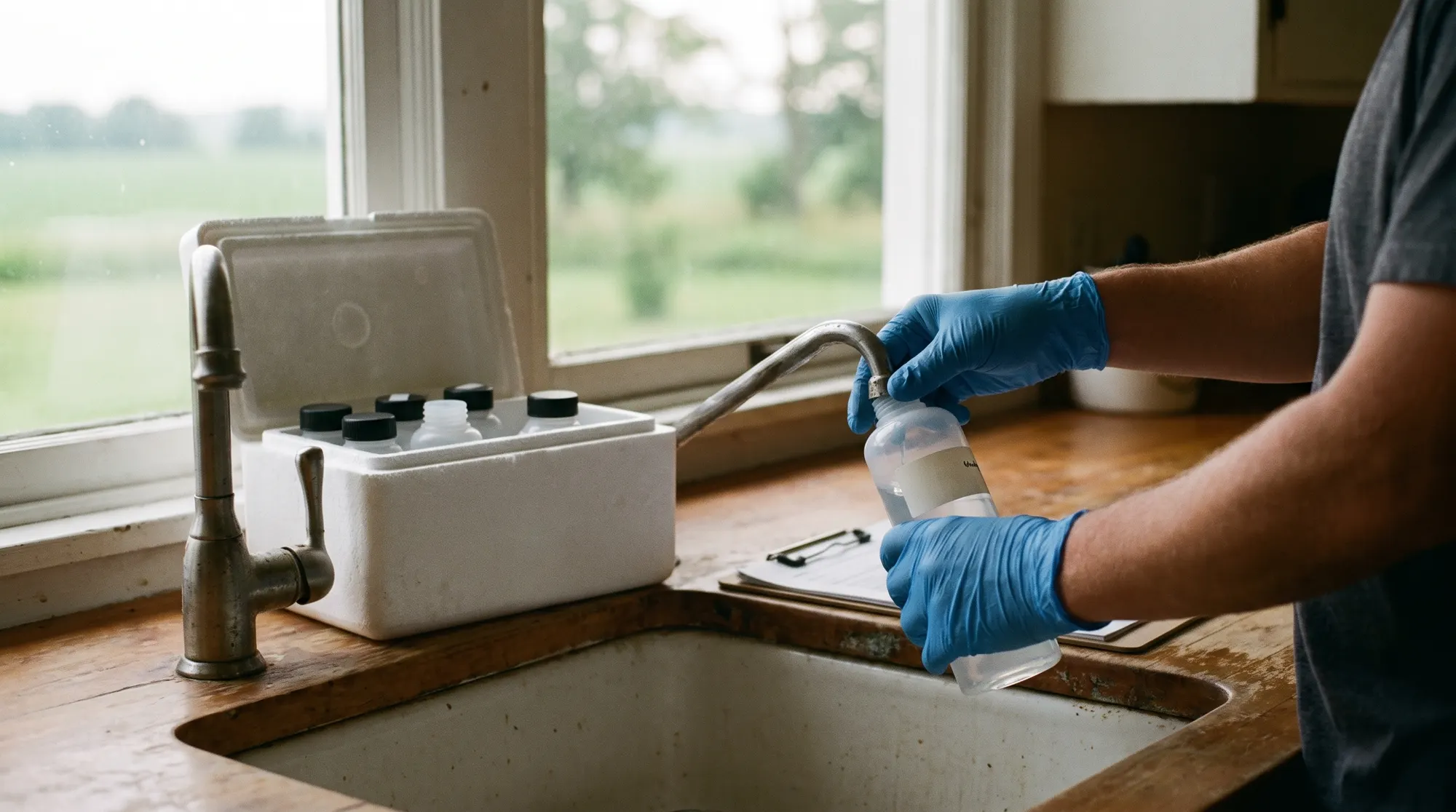 WATER TESTING
Water testing, explained.
What a test measures, what the results mean, and what happens next.
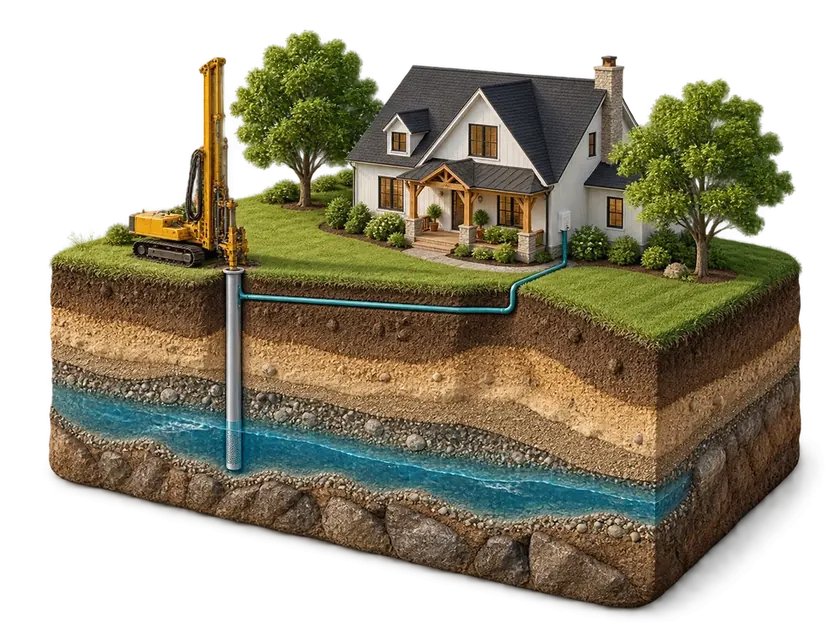
YOUR NEXT STEP
Your Number Starts
with a Test.
Call or fill out the form to schedule your water test. The quote follows the result, one system per problem, every line explained.