
WELL PUMPS · WESTERN PA & NORTHEAST OHIO
For efficient, long-lasting deep-well water systems, a submersible pump is the standard. We supply and install Goulds, Franklin Electric, and Grundfos pumps, sized to your well and set below the frost line, for homes, farms, and businesses.
Serving our communities since 1967
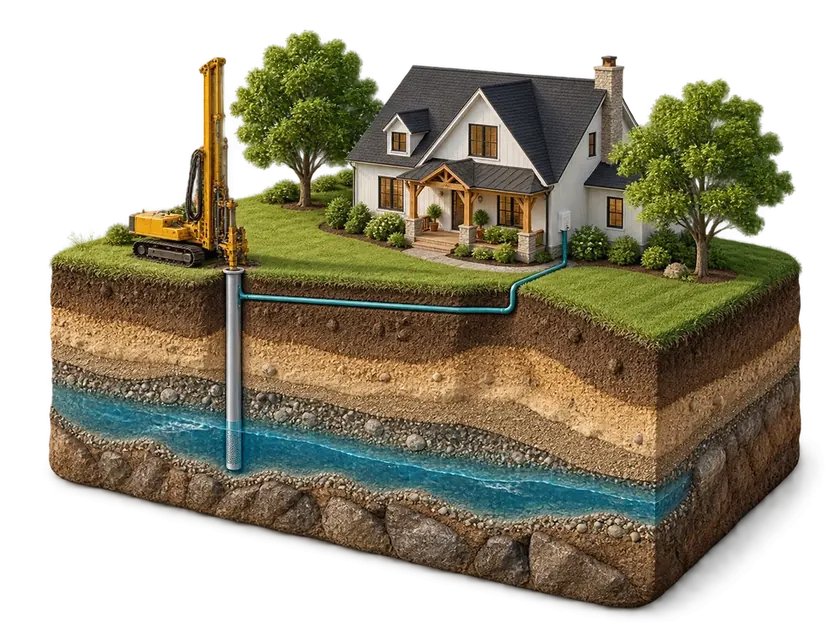
A submersible pump sits deep inside the well, fully under water, and pushes water up to the house. That one placement decision is where most of its advantages come from.
Schedule pump service- 01Energy-efficientThe pump pushes water up from below instead of pulling it from above, which is the cheaper direction. That means lower electric bills for the same delivery.
- 02Low maintenance, long lifeProtected from the weather inside the well, a submersible sees less wear than a pump that lives above ground.
- 03Stronger pressureHigher water pressure for homes with several bathrooms, and for properties on hilly ground.
- 04Freeze-resistantInstalled below the frost line, so a Pennsylvania or Ohio winter does not interrupt the supply.
- 05Self-primingNo extra steps or equipment to start it. Once installed, it pumps.
- GouldsThe submersible line Chatfield has installed longest, sized from the well’s depth and yield.
- Franklin ElectricPumps and the motors and controls that run them.
- GrundfosInstalled where its efficiency and pressure suit the property.
- WHAT A NEW SUBMERSIBLE CHANGES
- Steady pressure upstairs and at the far end of the house
- A quieter system, with the pump underground
- A record of what went in and when, for the next owner
IS THIS YOUR PUMP?
Signs a Well Pump Is
Wearing Out.
A pump develops issues over time like any mechanical system. Catching the signs early can save you a major breakdown. Any of these is worth a call, and none of them needs you to open anything.
HOW A SUBMERSIBLE WORKS
Pushed Up,
Not Pulled.
A submersible pump is a long, narrow motor and pump that hangs in the well on its own pipe, under the water. Everything about it follows from that.
- 01
Submerged intake
Water enters through a screen at the pump, deep in the well and below the water level, so there is nothing to prime and nothing to freeze.
- 02
Stacked impellers
The motor beneath the pump drives a stack of impellers. Each one adds pressure to the water passing through, which is how a pump the width of the casing lifts water hundreds of feet.
- 03
Up the drop pipe
Water rises through the drop pipe to the pitless adapter, a fitting through the casing wall below the frost line, and out along the buried line to the house.
- 04
To the tank
The pump fills the pressure tank until the switch reaches cut-out and stops it. Then it rests, under water, until the next demand.
SUBMERSIBLE PUMPS
Submersible Pumps in
Pennsylvania and Ohio.
When it comes to efficient and long-lasting deep well water systems, submersible pumps are a top choice, and Chatfield Drilling is the trusted provider for submersible pumps in Pennsylvania and Ohio. We supply and install pumps from industry-leading brands like Goulds, Franklin Electric, and Grundfos, delivering dependable performance and peace of mind for homeowners and businesses alike.
Why choose a submersible pump
Submersible well pumps are designed to sit deep inside your well, fully submerged in water. This design makes them energy-efficient, low-maintenance, and highly reliable, especially in rural or deep-well applications. Engineered for efficiency, they help reduce your electricity bills while maintaining excellent water delivery. Protected from the elements, they experience less wear and tear than other pump types, which translates to minimal maintenance and extended durability, even through a Pennsylvania winter.
Stronger pressure, deeper wells
Need stronger water pressure? Submersible pumps generate higher water pressure, making them ideal for homes with multiple fixtures or properties on hilly terrain. They are also the right pump for accessing groundwater from deep wells, offering reliable and consistent flow for rural homes, farms, and commercial properties across both states.
Freeze-resistant and self-priming
Because they’re installed below the frost line, submersible pumps are naturally protected against cold winters, so your water supply stays uninterrupted in freezing conditions. And they are self-priming: no extra steps or equipment are needed to start them. Once installed, they begin pumping water right away.
“Chatfield Drilling replaced a submersible pump, extended our well casing above ground, and installed a sanitary cap at our farm house. This is our first experience with a well. Both Matt and Sam were happy to answer all of our questions, no matter how small, in a way that we could understand and enabled us to make informed decisions.”
Trusted submersible pump brands
At Chatfield, we only work with the best. We proudly install Goulds, Franklin Electric, and Grundfos submersible pumps, known for their exceptional quality, reliability, and performance in the field. Where a well is shallow, a jet pump may fit instead. We match the pump to the well.
Choose Chatfield for submersible pumps
Make the smart choice for your water system, with expert guidance, quality products, and dependable installation across ten counties in Western Pennsylvania and Northeast Ohio:
HOW WE WORK
Diagnose First.
Then Size the Pump.
A pump is pulled once the visit has shown it is the pump. Then it is replaced with one matched to the well.
- 01
Diagnose the system
Pressure, flow, and delivery problems can start in the pump, the controls, the tank, or the plumbing. We find which before a pump is pulled.
- 02
Size it to the well
The well’s depth and yield, the household’s demand, and the pressure the system needs to hold determine the pump, from Goulds, Franklin Electric, or Grundfos.
- 03
Pull & replace
The old pump comes up on its drop pipe and wire. The pitless adapter and wiring are checked, and the new pump goes down and is set at the right depth.
- 04
Test, sanitize & record
The system is run through its cycle, the well is sanitized after the work, and what went in is recorded for the next visit.
A LITTLE CLARITY
Submersible Pump Questions.
Straight Answers.
What are common problems with submersible well pumps?
Households typically notice the symptoms rather than the cause: reduced flow, low or fluctuating pressure, a pump that runs continuously, or no water delivery. Those symptoms can originate in the well itself, the pump, wiring, controls, or the pressure tank. Record when the change began and any related event such as a power interruption or recent service.
What size submersible pump do I need for my well?
Sizing depends on the well’s depth and yield, the household’s demand, and the pressure the system needs to maintain. It is determined from the specifics of your well and home rather than chosen from a general chart. Chatfield evaluates the system before recommending equipment.
Why is a submersible pump more efficient than a jet pump?
It pushes water up from below instead of pulling it from above. Pulling is limited by suction, which is why jet pumps run out of reach in deeper wells. Pushing is limited only by the motor. For a deep well that means less energy for the same delivery, and a pump that never has to hold a prime.
How long does a submersible pump last?
Service life depends on the equipment, installation, water conditions, and cycling frequency. Rather than counting on a fixed number of years, keep records of installation and service dates and watch for changes in flow and pressure. Consistent monitoring gives more warning than an average figure.
How is a submersible pump replaced?
The old pump is pulled up the well on its drop pipe and wire, the pitless adapter and the wiring are checked, and the new pump, sized to the well’s depth and yield and the household’s demand, is lowered and set. The system is tested through a full cycle, the well is sanitized, and the installation is recorded. Iron and sediment in the water are checked too, since both shorten a pump’s life.
Does Chatfield replace submersible pumps?
Yes. Failed pumps, waterlogged pressure tanks, low pressure, and low flow are part of Chatfield’s well maintenance and repair work, along with new installation and replacement of well systems and equipment. Call (724) 588-2652 to schedule service.
Talk with the Chatfield team.
(724) 588-2652A LITTLE KNOWLEDGE GOES A LONG WAY
Know Your System.
 WELL PUMPS
Jet pumps, for the shallow well.
Single line or dual line, where a jet pump fits, and when a submersible is the better answer.
 WELL PUMPS
Pressure tanks.
The tank is what lets the pump rest. Waterlogged tanks, short cycling, and the fix.
 FIELD NOTES
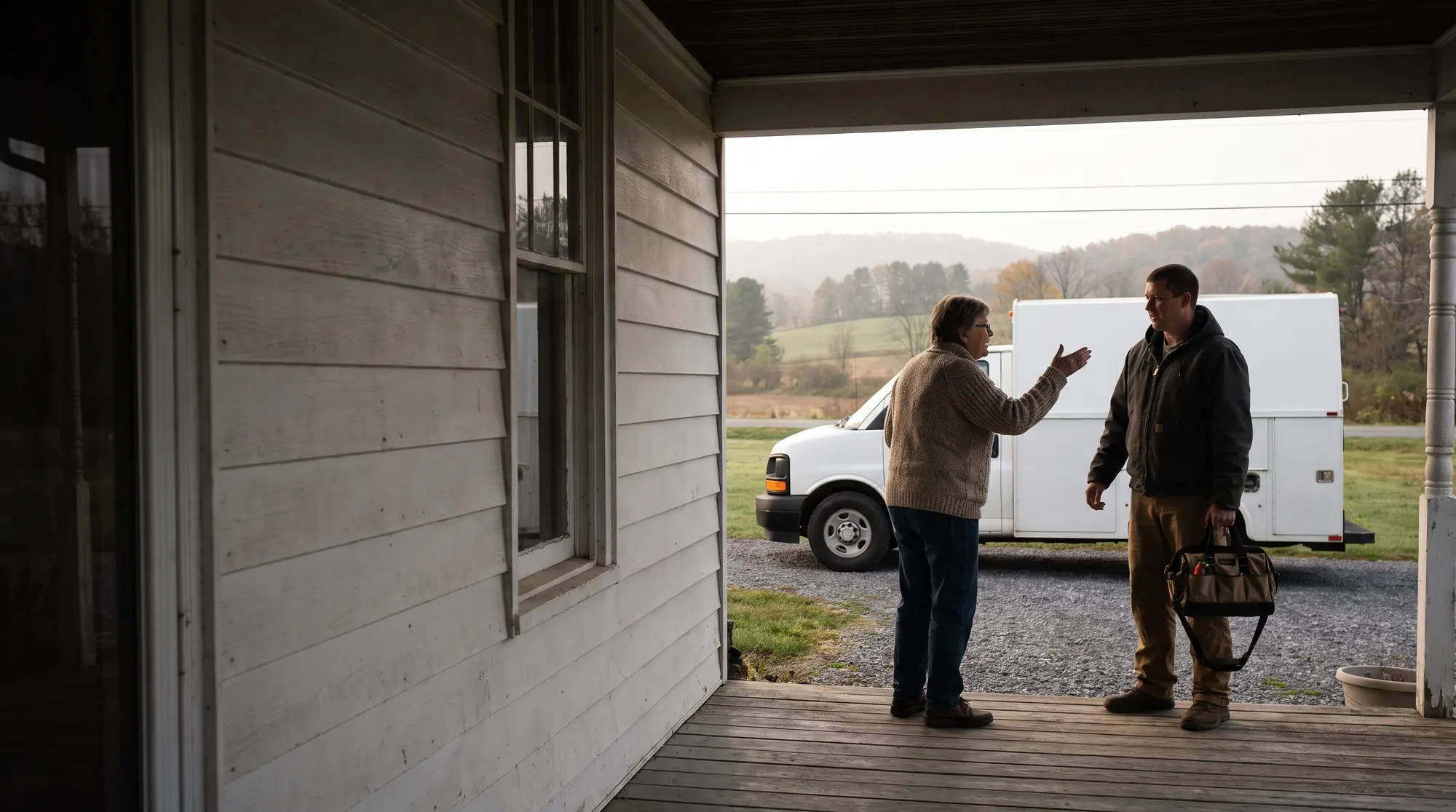
What to record before you call.
The timeline, the safe observations, the records, and what not to touch.
YOUR NEXT STEP
Need a Submersible Pump?
Start with the Well.
Contact us to schedule a consultation. We’ll evaluate the well, size the pump to it, and install the best in performance and protection.