
WELL SERVICE · WESTERN PA & NORTHEAST OHIO
So, you’ve found the perfect home, but it has a water well. Don’t fret. It’s more common than you think, and it comes with a short list of things to check before you sign: the water, the flow, and the equipment that delivers it.
Serving our communities since 1967
A standard home inspection can miss low pressure, a tired pump, or contamination. A well inspection looks at the water and the system that delivers it, and gives you a report to negotiate with.
Schedule a well inspection- 01The waterTested before you sign: coliform bacteria, nitrates, pH, and the minerals and contaminants that affect health or plumbing.
- 02The flow rateHow much water the well provides per minute. A low rate means shortages at peak use. The inspection measures it.
- 03The pumpIts age, condition, and horsepower. The heart of the system, and the part that fails without warning.
- 04The pressure tankIts size and condition. A waterlogged tank is a repair you would rather the seller paid for.
- 05The treatmentFilters, softener, UV: their age, purpose, and whether each is doing its job.
- UncoversProblems a standard home inspection might miss: low pressure, pump trouble, contamination.
- NegotiatesRepairs with the seller before closing, with the findings in writing.
- SettlesWhether the well and water are in working order, so the surprises are not yours to pay for.
- THE LENDER’S TEST
- Different lenders require different things
- Your agent, your lender, and Chatfield can walk you through it
- A real-estate water test is a phone call away
BUYING A HOME WITH A WELL?
When to Book
a Well Inspection.
Even if the home inspection goes smoothly, it’s essential to have the well and water specifically evaluated. These are the moments buyers call us.
WHAT AN INSPECTION COVERS
The Water, the Flow,
the Equipment, the Report.
A specialized well inspection can identify issues a standard home inspection might miss. It looks at four things, in the order they matter to a buyer.
- 01
The water
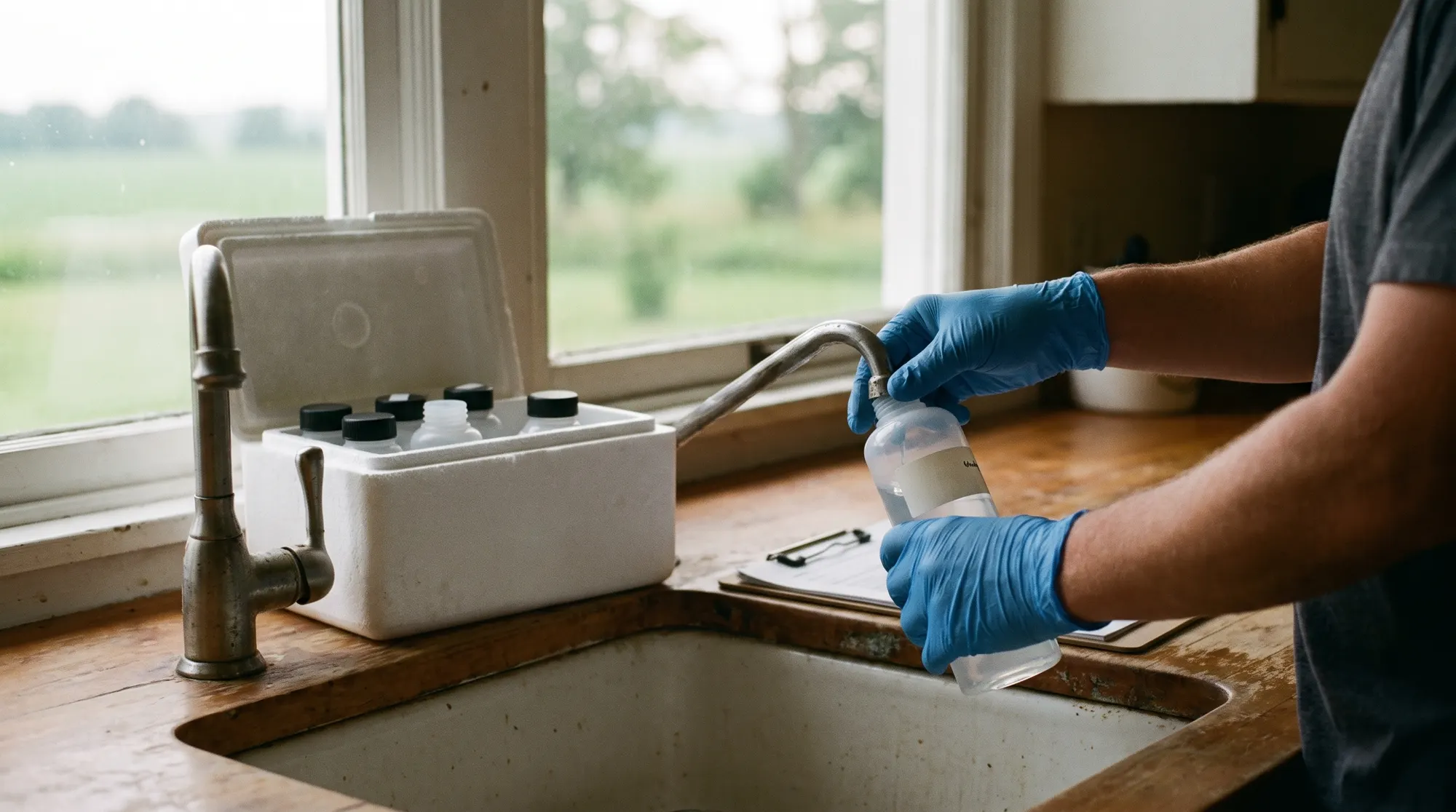
It is sampled and tested before you sign for coliform bacteria, nitrates, pH, and the minerals and contaminants that could affect your health or the plumbing, matched to what the lender asks for.
- 02
The flow rate
We measure how much water the well provides per minute. A low flow rate means shortages at peak use, and most homes need about 7 gallons per minute.
- 03
The equipment
We check the wellhead and cap and the pump’s age, condition, and horsepower, then the pressure tank’s size and condition and the treatment equipment’s age, purpose, and function.
- 04
The report
You get the findings in writing. If problems are found, you can use the report to negotiate repairs with the seller before closing, or simply know what you are buying.
BUYING A HOUSE WITH A WELL
Buying a House with a Water Well?
Chatfield Can Help.
While relying on a private well for water might seem daunting, it’s more common than you think, especially in rural areas. Buying a house with a well does come with its own set of considerations. Here are the essentials.
Water quality and quantity
Testing is key. Before you sign on the dotted line, get the well water tested. This will reveal whether there are any bacteria, minerals, or contaminants that could affect your health or the plumbing. Look for tests that cover coliform bacteria, nitrates, pH levels, and other potential issues. Flow rate matters. A well’s flow rate determines how much water it can provide per minute. A low flow rate can lead to water shortages, especially during peak usage, and a professional well inspection includes a flow-rate test.
The typical system components
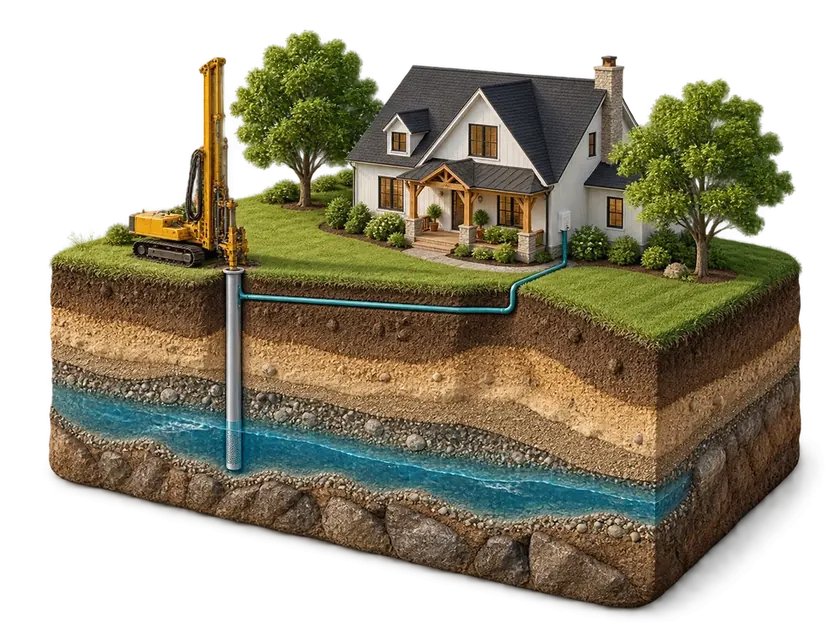
The pump. At the heart of your well system, the pump brings water to the surface. Understand its age, condition, and horsepower. The pressure tank. This tank stores water and helps maintain consistent water pressure. Check its size and condition. Water treatment. These components remove the unwanted things water can bring into the home. They have a dirty job so your water is clean. Know the age, purposes, and function of each to be sure it is operating.
Why water testing and inspection are crucial
Even if the home inspection goes smoothly, it’s essential to have the well and water specifically evaluated. A specialized well inspection can uncover hidden problems like low water pressure, pump problems, or contamination that a standard home inspection might miss. If problems are found, you can use the inspection report to negotiate repairs with the seller before closing the deal. And knowing your well and water system are in good working order provides peace of mind and helps you avoid costly surprises down the road.
“Chatfield Drilling replaced a submersible pump, extended our well casing above ground, and installed a sanitary cap at our farm house. This is our first experience with a well. They were on time, sent reminders ahead of time, and told us who would be arriving. Amazing to deal with, thank you!”
Ongoing maintenance
Owning a home with a well means being a proactive homeowner. Schedule yearly well inspections to catch potential problems early. Test your water quality regularly, especially if you notice any changes in taste, odor, or appearance. And maintain the well pump, pressure tank, and water treatment to ensure their longevity.
How Chatfield can help
At Chatfield, we specialize in well and water treatment services. Our experts thoroughly inspect the well system, including the pump, tank, and water quality. We provide detailed water testing to identify contaminants and recommend appropriate treatment, offer water treatment solutions from softeners to filtration systems, and help you maintain the well and water system with regular service and preventative maintenance. Different lenders require different things, and your real estate agent, your lender, and Chatfield can help you with the process. In need of a real-estate water test? Just let us know, anywhere in our ten counties:
HOW WE WORK
Inside the Contingency,
in Writing.
A purchase agreement runs on deadlines. Tell us yours when you call, and the visit and the lab work are scheduled around it.
- 01
Book inside the contingency
Tell us the inspection deadline in your contract. Different lenders require different things. Your agent, your lender, and Chatfield can sort out which test they need.
- 02
Sample, measure, inspect
The water sampled for the lab, the flow rate measured, and the wellhead, pump, tank, and treatment looked over.
- 03
Report
Results and findings come in writing, in time to negotiate repairs with the seller before closing.
- 04
After closing: the annual checkup
Owning a home with a well means being a proactive homeowner. The inspection becomes the baseline for the yearly visit.
A LITTLE CLARITY
Well Inspection Questions.
Straight Answers.
What does a well inspection include?
A comprehensive well inspection looks at the well system and the water together. It covers a water test for bacteria, nitrates, pH, and other contaminants, a flow-rate test, and the condition of the wellhead, the pump, the pressure tank, and the treatment equipment. The result is a written report that identifies problems a standard home inspection might miss, such as low pressure, pump trouble, or contamination.
Is a well inspection required to buy a house?
That depends on the lender and the loan. Some loan programs require a water test on a private well before closing, and different lenders require different things, so ask early. Even where nothing is required, a well and water evaluation is the only way to know what you are buying, and the report is what lets you negotiate repairs before the deal closes.
How much water flow should a well have?
Most homes need a well that can produce about 7 gallons per minute, though the right figure depends on the household’s actual demand, including seasonal use such as watering and washing. A low flow rate can lead to water shortages, especially at peak usage, which is why a professional well inspection includes a flow-rate test rather than taking the seller’s word for it.
What if the water test comes back positive?
A positive coliform result is confirmed with a second sample, and the cause is looked for. A wellhead below grade, a damaged cap, or a well that needs cleaning are common causes. The fix may be a wellhead extension, a well cleaning and shock chlorination, or a UV or chlorination system, and the report spells out which. Most of the time it is a repair to negotiate, not a reason to walk away.
Who pays for repairs the inspection finds?
That is between you and the seller, and the inspection report is your evidence. Buyers commonly negotiate a repair, a credit at closing, or a price adjustment for problems the report identifies, the same way they would for a roof or a furnace. Chatfield can quote the repair so the negotiation has a real number in it.
How soon can Chatfield inspect?
Tell us the inspection deadline in your purchase agreement when you call, and we will fit the visit inside it where we can. Lab results for the water test take longer than the visit itself, so the earlier the sample is drawn, the more room the contingency leaves you. Call (724) 588-2652 to schedule.
Talk with the Chatfield team.
(724) 588-2652A LITTLE KNOWLEDGE GOES A LONG WAY
Before You Sign.
 WATER TESTING
Water testing, explained.
What a test measures, what the results mean, and what happens next.
 WATER PROBLEMS
Bacteria in your water.
What a coliform result means, what to do now, and which treatment follows.
 WELL SERVICE
The annual well checkup.
The wellhead, the yield, the switch and tank, and the water itself, once a year.
YOUR NEXT STEP
Under Contract?
Test Before You Sign.
Call or fill out the form with your inspection deadline. We’ll evaluate the well and the water and give you a report you can negotiate with.