

WATER PROBLEMS · WESTERN PA & NORTHEAST OHIO
Hydrogen sulfide: a gas the water carries up from the well, or makes in your water heater, and releases every time a tap runs. Four checks tell the two apart. A test measures it; injection and carbon take it out.
Serving our communities since 1967
- A rotten-egg smell when a tap runs, worst at the hot tap and first thing in the morning
- A wet-dog, musty, or swampy smell or taste from the water
- Silver and silver-plated fixtures tarnishing black
- The bathroom fills with the smell during a shower and clears once the water stops
- Black stains or a dark slime alongside it: sulfur bacteria living in the system
Symptoms overlap, and more than one can be true at once. A water test settles it.
Schedule a water testWHAT IT IS
A Gas in the Water,
Released at Every Tap.
Hydrogen sulfide is produced by sulfur-reducing bacteria that live in groundwater and in the rock formations around a well. They feed on naturally occurring sulfur compounds and release the gas as a byproduct. The water carries it dissolved, and it comes out of solution wherever the water is heated, agitated, or left to stand, which is why the smell is worst at the hot tap, in the shower, and first thing in the morning.
There is a second source inside the house. A water heater is warm, dark, and full of sulfate, and the magnesium anode rod inside most tanks can react with that sulfate to make the same gas. A smell that lives only in the hot water usually points there, and the fix is at the heater, not at the well. Hydrogen sulfide has no EPA health standard; it is an aesthetic problem, and a corrosive one, tarnishing silver and working on iron and copper plumbing over time.
How to confirm it
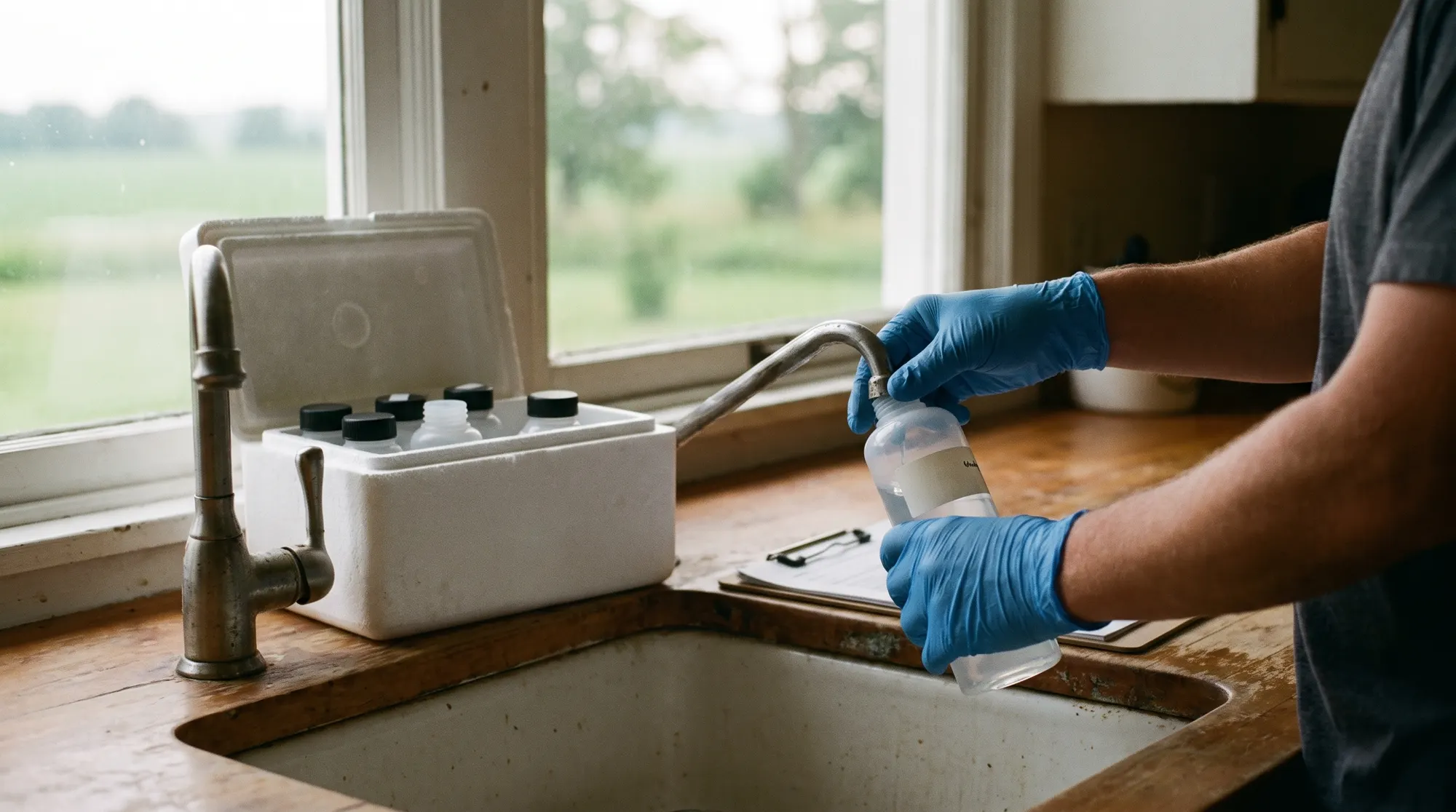
Bring the pattern: hot or cold or both, which fixtures, whether the smell is in a glass carried away from the sink, when it started. The gas leaves a sample that is shipped, so hydrogen sulfide is measured at the tap, on site, alongside the iron, pH, and bacteria that share its chemistry. The concentration sets the dose for the injection system.
- 01Hot water onlyThe water heater, not the well: bacteria living in the tank, or the magnesium anode rod reacting with the water. The fix is at the heater.
- 02Hot and cold, at every tapHydrogen sulfide in the groundwater, or sulfur bacteria in the well itself. The pattern the injection-and-carbon system is built for.
- 03Strong at one sink, gone from a glass carried awayThe drain, not the water. Fill a glass, step away from the fixture, and smell it there before deciding anything.
- 04Comes and goes: first thing, or after a trip awayGas collecting while the water sits. It is still the water, and the pattern tells the tester how the well behaves between uses.
- Any you can smellThere is no EPA standard for hydrogen sulfide; the nose finds it at very low levels. The test reports the concentration so the injection system is dosed to a measured level.
- Iron and pH tooSulfur rarely travels alone. Iron and low pH share its chemistry and its treatment sequence, so the same panel reports them.
- WHAT SULFUR TREATMENT CHANGES
- No smell at any tap, hot or cold, first thing in the morning
- Coffee, cooking, and bathing taste and feel like the water again
- Silver stops tarnishing; the gas stops working on the plumbing
TELL THE WELL FROM THE HEATER
Four Checks Before
Anyone Touches Anything.
None of these is a diagnosis. Together they turn “the water smells” into a sentence a tester can work with: “hot water in two bathrooms, not the cold kitchen tap, started two weeks ago after the power was out.”
- 01
Cold, then hot
Fill a glass at a cold tap and smell it. At a separate time, do the same with hot water, without scalding water and without opening anything. Write down which one carries the smell, or whether both do.
- 02
Carry the glass away
Fill a clean glass, step away from the sink, and smell it there. If the smell is in the glass, it is in the water. If it is only near the fixture, it is the drain, and the water may be fine.
- 03
Walk the house
Check the kitchen, bathrooms, utility sink, outdoor tap, and washing machine. Note which fixtures carry it and which do not, and whether it changes with how much water has been used.
- 04
Write the timeline
When it started, and what changed around then: a period of low use, a power interruption, plumbing or water-heater work, a change to a treatment system, a new appliance. That gives context; it does not name a cause.
Do not drain, disinfect, or open the water heater, pour anything into the well or the plumbing to see whether the smell changes, or bypass a treatment system to test a theory. Observations are enough for the first call.
WHAT IT DOES
Air Fresheners
Won’t Fix Your Water.
Opening windows and running fans reduce the smell for a while, but the hydrogen sulfide is in the water supply. Every time a faucet, shower, or dishwasher runs, the gas is released into the house again. The only real fix treats the water at the point of entry, before it reaches a single tap.
- Drinking, cooking, bathing. Water that smells like this is unpleasant to drink, cooks into food and coffee, and turns a shower into the worst room in the house.
- Silver and fixtures. The gas tarnishes silver and silver plate black and dulls chrome; the corrosion it starts in iron and copper plumbing is slower and costlier.
- The next system. Sulfur bacteria foul softener resin and filter media. A softener installed on untreated sulfur water needs cleaning far sooner than it should.
- The well itself. When the bacteria have colonized the well, they build a slime that reduces yield over time, and a well cleaning belongs ahead of any treatment system.
THE FIX
Oxidize It,
Then Filter What’s Left.
The treatment comes in two steps, after the test confirms hydrogen sulfide. Injection neutralizes the bacteria and oxidizes the gas; carbon filtration takes out what remains. It eliminates the source rather than covering the smell.
- INJECTION + CATAPURE CARBON
Chlorine or peroxide, then carbon.
A measured injection of chlorine or hydrogen peroxide oxidizes the hydrogen sulfide and stops the bacteria that make it; the CataPure Carbon System filters the byproducts so every tap runs clean and odorless. It is dosed from the test and installed at the point of entry.
How sulfur removal works - HOT WATER ONLY?
Then the fix is at the heater.
When the cold water is clean and only the hot water smells, the water heater is making the gas. A different anode rod and a flush usually settle it, and no whole-home system is needed. The test and the four checks establish which case is yours before anything is quoted.
Start with the test
A LITTLE CLARITY
Sulfur Questions.
Straight Answers.
How do I get rid of the rotten-egg smell in my well water?
Covering the smell does not address it. Chatfield’s approach is a two-step treatment applied after testing confirms hydrogen sulfide: chlorine or hydrogen peroxide injection neutralizes sulfur-reducing bacteria and oxidizes the gas, then the CataPure Carbon System filters remaining byproducts. Because the gas is in the water supply, opening windows or running fans only reduces the odor temporarily.
Why does my well water smell like rotten eggs?
Hydrogen sulfide gas is the usual cause, produced by sulfur-reducing bacteria that live in groundwater and the rock formations around a well. Other signs include a wet-dog or musty odor, an earthy or swampy taste, tarnishing on silver, and an odor that is worse with hot water. Where the odor appears matters, so note whether it is hot water only or both.
Why is it only my hot water that smells?
Then the water heater is the likely source rather than the well. Bacteria can live in the warm tank, and the magnesium anode rod inside most heaters can react with sulfate in the water to make the gas. The fix in that case is at the heater, a different anode and a flush by a plumber, and no whole-home system is needed. The cold-then-hot check settles which case you have before anyone quotes anything.
Can the sulfur smell be removed from well water?
Yes, when the treatment matches what testing finds. The combination of an injection system and carbon filtration is designed to eliminate the source rather than mask it. Chatfield tests on-site or through a certified lab to confirm hydrogen sulfide levels and rule out other issues before recommending a configuration.
Is it safe to use well water that smells like sulfur?
An odor is an observation, not a safety determination, and the answer depends on what testing shows for your specific well. Hydrogen sulfide has no EPA health standard; the nose finds it at levels far below any that matter for health, and water can smell unpleasant for reasons unrelated to safety. Have the water tested and discuss the results with a qualified professional. Call (724) 588-2652 to schedule a water test.
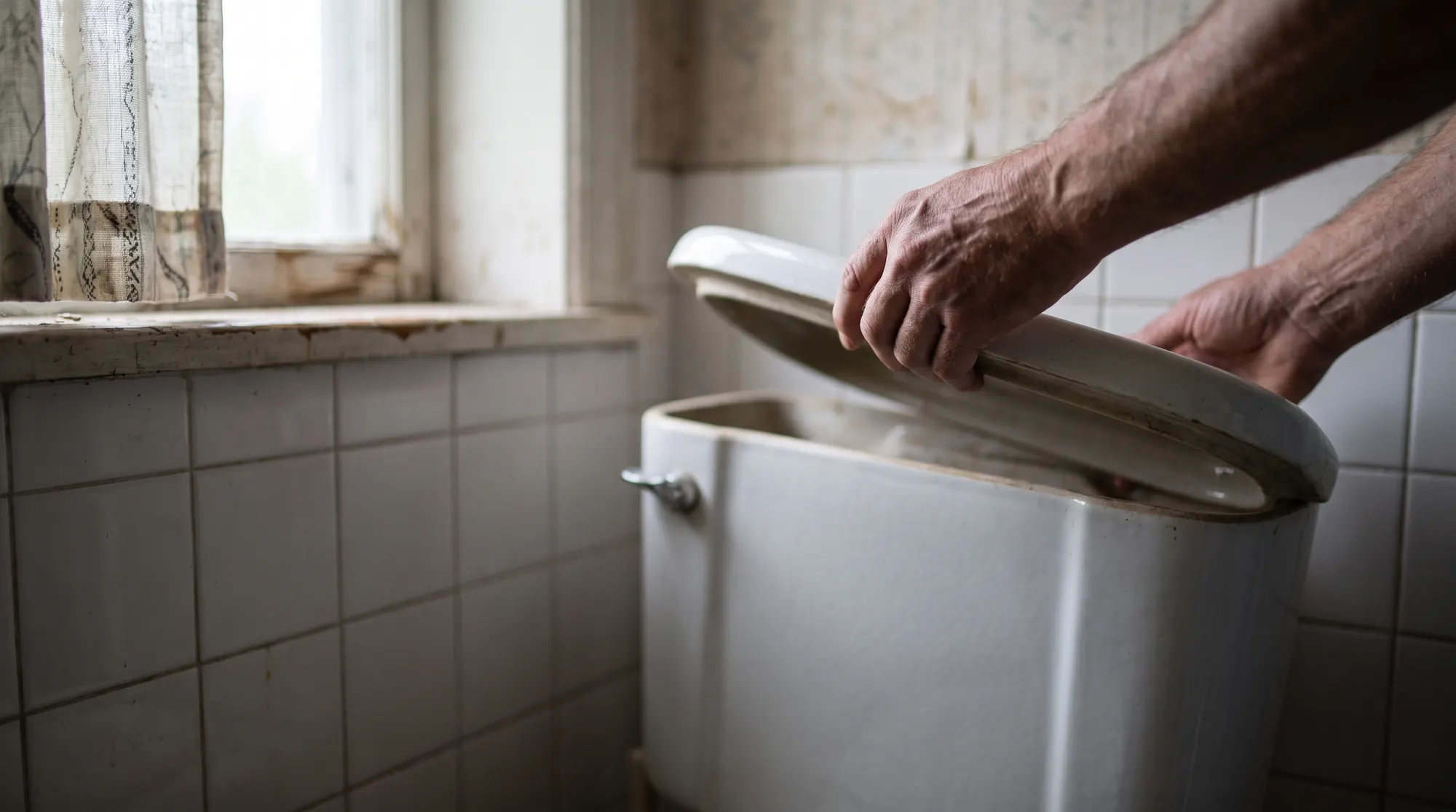
Is the smell the same problem as slime in the toilet tank?
They are related, but not the same. Sulfur bacteria and iron bacteria are both nuisance organisms rather than health organisms, and both can leave a slime in the tank, on aerators, or in a softener. The smell is the gas the sulfur bacteria produce. When the bacteria have colonized the well itself, a well cleaning comes before the treatment system, or the system fights a losing battle.
Talk with the Chatfield team.
(724) 588-2652A LITTLE KNOWLEDGE GOES A LONG WAY
Know Your Water.
 WATER PROBLEMS
Slime in the toilet tank.
The nuisance biofilm that fouls wells and softeners: what it is and what to do about it.
 WATER TESTING
Water testing, explained.
What a test measures, what the results mean, and what happens next.
 WATER TREATMENT
Every system we install.
One system per problem, combined in the right order when your water has more than one.

YOUR NEXT STEP
Find the Source.
Then Fix It.
A water test tells us whether the gas is coming from the well or the heater, how much there is, and what else is in the water. From there, the recommendation is specific to your home.