
WATER TESTING · WESTERN PA & NORTHEAST OHIO
No one is monitoring a private well but its owner. A test once a year, and whenever something changes, is how you know what’s coming out of the tap. We collect the sample, a certified lab runs it, and we explain the numbers.
Serving our communities since 1967
No agency monitors a private well. The annual test is the closest thing a well owner has to a check-engine light, and the panel grows every few years.
Schedule a water test- Total coliform & E. coli
- Nitrate
- pH
- Iron & manganese
- Hardness
- Arsenic
- Lead
- VOCs
- Sulfate & hydrogen sulfide
- Turbidity
- TEST SOONER IF
- After flooding, heavy rain, or a well that went under water
- After work on the well, the pump, or nearby plumbing
- A change in taste, smell, or color
- Buying a home with a well, whatever the seller says
- A new baby in the house: nitrate, before any well water is used
- A neighbor’s well tests positive
- New construction, blasting, or farming nearby
WHAT A TEST MEASURES
Two Kinds of Line.
One Report.
Health standards are enforceable limits; crossing one means treat the water or find another source. Aesthetic standards are where the water starts ruining fixtures, laundry, and taste. Both show up on the same page.
| Health standard | The limit | Why it matters |
|---|---|---|
| Total coliform & E. coli | None detected | The indicator for surface water or waste reaching the well. Any detection means stop drinking it and call. |
| Nitrate | 10 mg/L as nitrogen | From fertilizer, septic systems, and livestock. Dangerous for infants under six months; boiling concentrates it. |
| Arsenic | 10 µg/L | Naturally occurring in some Pennsylvania bedrock. No taste, no odor; only a test finds it. |
| Lead | 15 µg/L action level | Usually from older plumbing rather than the well, and made worse by acidic water. |
| Aesthetic standard | The line | What it looks like |
|---|---|---|
| Iron | 0.3 mg/L | Orange and brown staining, a metallic taste; above the line in many Western PA wells. |
| Manganese | 0.05 mg/L | Black staining and a bitter, metallic taste. |
| Hardness | 7 gpg hard · 10.5 very hard | Scale, spots, and soap that won’t lather. Calcium and magnesium from limestone and dolomite. |
| pH | 6.5 to 8.5 | Below it, acidic water corrodes plumbing and leaves blue-green stains; above it, scale and a bitter taste. |
| Hydrogen sulfide | Any you can smell | The rotten-egg smell, from the well or from the water heater. |
| Turbidity | What settles in a glass | Grit, cloudiness, and clogged aerators; a well problem as often as a water problem. |
EPA maximum contaminant levels, the lead action level, and secondary standards; USGS hardness classes. Manganese also carries an EPA lifetime health advisory of 0.3 mg/L.
HOW A TEST GOES
From the Question
to the Report.
A report is only as good as the sample, and the sample is only as useful as the question it was collected to answer. Here is the whole path.
- 01
The question
Write down what prompted the test: where it shows up, hot or cold water, when it began. A sample answers only the question it was collected for.
- 02
The sample
It goes in a sterile bottle from the lab, with the cold tap run for two or three minutes first. Nothing touches the inside of the bottle, and a bacteria sample stays cold and reaches the lab the same day.
- 03
The lab
A Pennsylvania DEP-certified laboratory runs the panel, so the report holds up for a real estate closing or an insurance claim as well as for your own decisions.
- 04
The walk-through
We go through the report with you: what was not detected, what was found below the standard, what exceeds it, and what the report does not answer. Then we cover the next step, if there is one.
WATER TESTING
Private Well Water Testing in Western Pennsylvania and Northeast Ohio.
Unlike municipal water, which a regulated utility tests continuously, a private well is entirely its owner’s responsibility. No government agency is monitoring it, and no one will send a warning if something changes underground. Even water that looks, tastes, and smells fine can carry contaminants: bacteria from surface water reaching the well, nitrate from fertilizer or a septic system, and naturally occurring iron, manganese, and arsenic from the bedrock. Without testing, there is no way to know.
What to do when a result fails
Most well water problems in this region are treatable, and the right response depends on what failed.
- Bacteria. Stop drinking the water and boil it for a minute before use. Shock chlorination usually clears it; if it comes back, the casing, cap, or seal is letting surface water in and needs repair, and UV disinfection keeps it from returning. Learn more
- Nitrate above 10 mg/L. Reverse osmosis at the kitchen tap for drinking and cooking water, and finding the source. Never use tap water for infant formula until it is fixed. Learn more
- Arsenic above 10 µg/L. A point-of-use reverse osmosis system or a whole-house arsenic-rated system, then an annual retest to confirm it is holding. Learn more
- Iron, manganese, or hardness. A treatment consultation. The right equipment depends on the level, the form of iron, and what else is in the water. Learn more
- Low pH. A calcite neutralizer, sized from the result, and a look at what the acidic water has already done to the plumbing. Learn more
Whatever the issue, the worst thing to do with a bad result is nothing. Water quality problems rarely resolve themselves, and a report that leads to a clear next conversation is worth more than one filed away.
Buying or selling a home with a well
Always test a well you are inheriting, whatever the previous owner says about it: you are the one drinking it now. If you are selling, most buyers’ lenders require a recent certified test and most agents recommend one, so test four to eight weeks before listing to leave time to address anything that comes back. A certified-lab report is also what holds up for an insurance claim.
The free water test
Chatfield offers a free water test and consultation. We collect the sample from your home, have it analyzed, and then walk you through what the results mean in plain English and recommend a treatment approach only if the water calls for one. The test is free; the equipment it may lead to is not, and it is quoted only after the results are in.
HOW WE WORK
Test First.
Everything Else Second.
Every treatment page on this site ends the same way, and this is where it starts.
- 01
Call or book
Tell us what you’re noticing, or that it has simply been a while. We schedule the visit from the office that covers your county.
- 02
We collect the sample
From your home, by the lab’s instructions, with the treatment system and well history noted so the report has its context.
- 03
The lab runs it
It goes to a certified lab for the panel the question calls for. Bacteria results come back first; a full panel takes longer.
- 04
Results, explained
We walk you through the report in plain English and recommend something only if the numbers call for it. No system is quoted before the test.
A LITTLE CLARITY
Good Questions.
Straight Answers.
How often should I test my well water?
At least once a year for bacteria (total coliform and E. coli), nitrate, and pH, which is the EPA’s minimum for private wells, and a fuller panel every three to five years or whenever you move into a home with a well: iron and manganese, hardness, arsenic, lead, VOCs if you are near industry or old oil and gas activity, sulfate and hydrogen sulfide if there is an odor, and turbidity. Penn State Extension adds that new wells and wells with a history of problems should be tested more often until the results are consistently clean.
Can I test my own water at home?
Home test kits and strips give rough readings for a few basic parameters, such as pH, hardness, and chlorine, but they cannot detect bacteria, arsenic, nitrate, or VOCs with any reliability. For results you can act on, use a state-certified laboratory. Home kits are fine for quick spot checks between lab tests; they do not replace certified testing.
My well has tested clean for ten years. Do I still need to test every year?
Yes. Groundwater conditions change with new construction, agricultural activity, drought, or changes on your own property, such as septic work or landscaping. A ten-year clean record is a good sign, but it is not a guarantee about what is in the well today. Consistent annual testing is still the standard recommendation.
Do I need to test my well before selling my home?
Pennsylvania law does not mandate it, but most buyers’ lenders require a recent test and most buyers’ agents recommend one. A clean result from a certified lab speeds the closing and prevents last-minute renegotiation. Test four to eight weeks before listing so there is time to address anything that comes back.
What happens if the test finds bacteria?
Stop drinking the water and use bottled water or boil it for a minute before use. The standard first response is shock chlorination, a measured dose of chlorine into the well; if bacteria return after that, there is a structural issue, such as a cracked casing or a failed seal, that needs physical repair rather than more chlorine. A UV system provides ongoing protection once the well is sound.
Is the water test free?
Chatfield offers a free water test and consultation: we collect the sample from your home, have it analyzed, and walk you through what the results mean and what, if anything, to do about them. The test covers the water itself; equipment, repairs and any other service are quoted separately, after the results. Call (724) 588-2652 or use the form on this page to schedule one.
Talk with the Chatfield team.
(724) 588-2652A LITTLE KNOWLEDGE GOES A LONG WAY
Know Your Water.
 WATER PROBLEMS
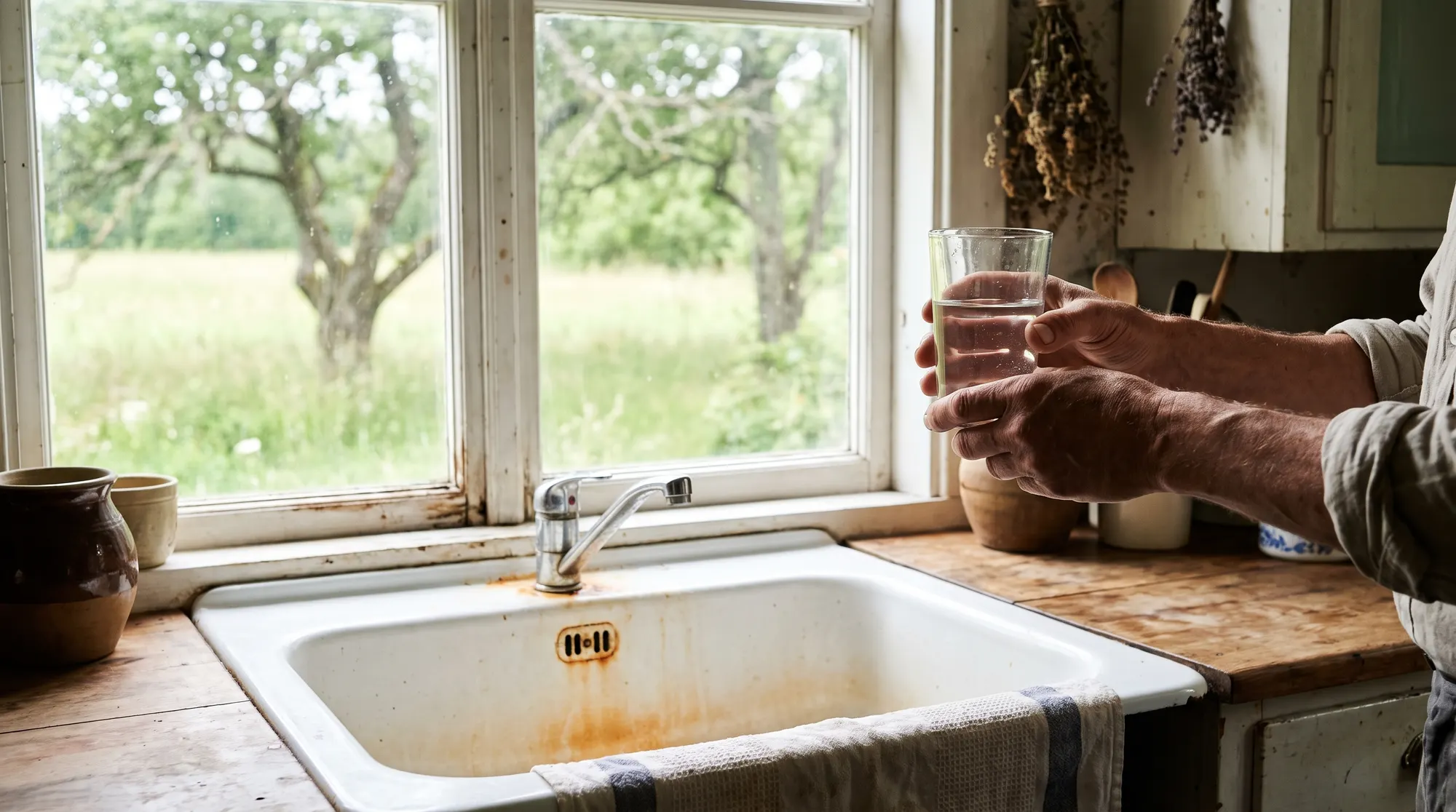
Something wrong with your water?
Stains, smells, grit, and test results: what each symptom means, and what fixes it.
 WATER PROBLEMS
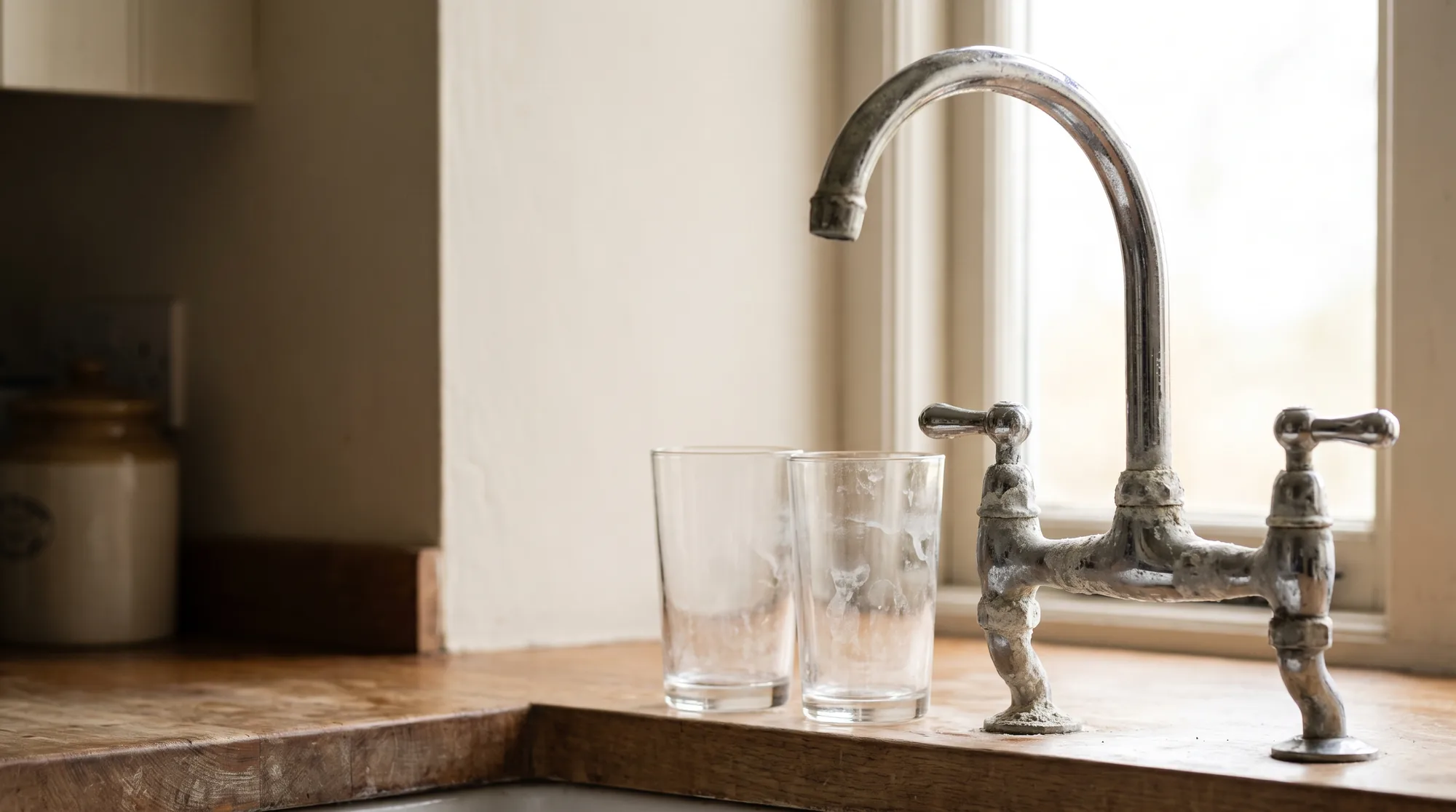
Do you have hard water?
The signs, what causes hardness in our region, and how to confirm it.
 WATER TREATMENT
One system per problem.
The Chatfield Water Systems line, and how the pieces work together when a well has more than one issue.
YOUR NEXT STEP
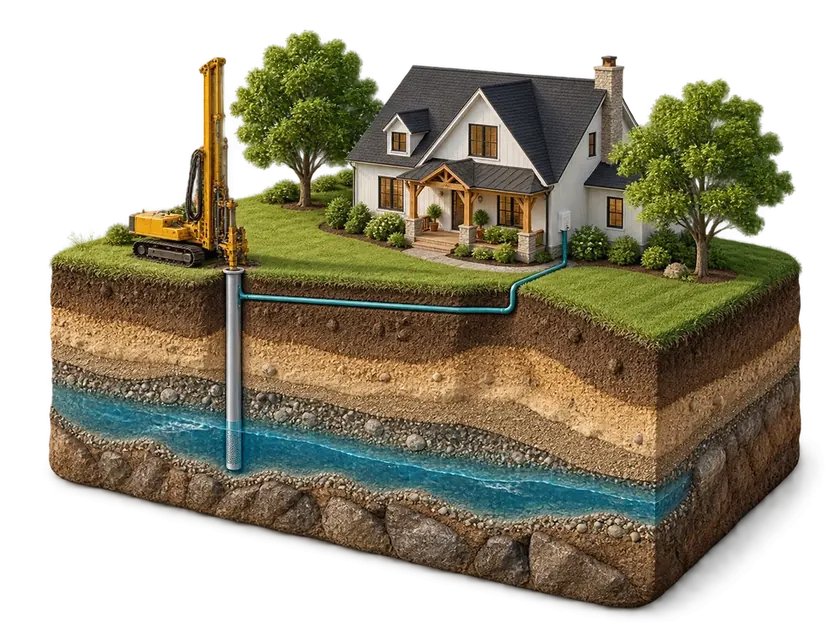
Start with a
Water Test.
Not sure what’s in your water? A test will tell you. We’ll collect it, run it, and walk you through the numbers.