

WELL PUMPS · WESTERN PA & NORTHEAST OHIO
Your well pump is the heart of your water system. When the water stops, sputters, or the pump will not quit, we diagnose the pump, the controls, the tank, and the plumbing, and fix the part that failed. Expect honest assessments and cost-effective solutions, on the same wells we drill.
Serving our communities since 1967
Weak pressure, sputtering taps, a pump that runs too much: the pump and the tank cause the same complaints. The first question on every call is which one, and the visit answers it before anything is replaced.
Schedule pump repairWeak flow even though the tank holds pressure properly: worn parts, a clogged intake screen, or a falling water table. A lag after a tap opens before water arrives. Grinding or buzzing from the pump itself.
Short cycling: the pump turns on and off every few seconds because the tank is waterlogged and has no air cushion. Pressure that is low or wanders through the day. A pump that runs constantly because the tank is not holding pressure for it.
Or something else: clogged or corroded pipes, a blocked filter or treatment system, a leak in the plumbing or the pressure line, plumbing undersized for the house, or a pressure switch set wrong. The evaluation rules these out too.
- When it startedThe date, and whether it followed an event: a power outage, service work, a vacant house.
- What changedWhich fixtures, whether it is constant or comes and goes, what the pump sounds like.
- Don’t open itNo covers off, no breaker resets, no switch adjustments. The system is energized and pressurized.
- WHAT A REPAIR VISIT CHANGES
- The failed part named and fixed, not the whole system swapped
- Pressure back, cycling normal, the pump resting between runs
- A record of what was installed when, for next time
IS THIS YOUR PUMP?
Six Signs a Well Pump
Needs Repair.
Like any mechanical system, a pump develops issues over time. Recognizing the signs of a failing well pump early can save you a major breakdown or a costly emergency.
HOW A REPAIR VISIT GOES
Find the Cause.
Then Fix the Part.
A weak shower can be the pump, the switch, the tank, or a pipe. Replacing the pump first is the expensive way to find out it was the tank. So the visit works from the house back to the well.
- 01
What you noticed
When it started, which fixtures, whether it is constant or comes and goes, and any event before it, such as a power outage, service work, or a vacant house. It is the timeline, without a guess at the cause.
- 02
Gauge, tank, switch
The cycle is watched while a tap runs. We check the needle, the tank’s air cushion, and cut-in and cut-out. A waterlogged tank and a bad switch are found here, before anything is pulled.
- 03
Power, controls, pump
The circuit and the controls, then the pump itself: whether it is drawing what it should, delivering what it should, and whether the well is keeping up with it.
- 04
The fix, and the record
We replace the failed part, not the whole system. Then the system is tested through its cycle, the well is sanitized where it was opened, and what went in is written down.
WELL PUMP REPAIR
Well Pump Repair and Replacement
in Western PA and Eastern OH.
Your well pump delivers clean, fresh water from your well to your home, and like any mechanical system it can develop issues over time. Whether you need a minor repair or a full pump replacement, our team has the experience and the equipment to get your system running reliably again. We take pride in honest assessments and cost-effective solutions that keep your water flowing.
What to watch for
Inconsistent pressure that rises and falls when a faucet runs can be a failing pressure switch, a leak, or a pump wearing out. Grinding, clicking, or banging from the pump or the tank points to mechanical wear, a failing motor, or air in the system. Water that sputters out with bursts of air means the pump is drawing air through a damaged pipe or a failing pump. A sudden spike in the electric bill often means the pump is running longer than it should to hold pressure. No water, or a serious drop in flow, can be pump failure, a faulty switch, or a problem in the well itself. And a pump that cycles constantly, even with no water running, is the pump, the switch, or the tank, and it wears the pump out fast.
Pump, tank, or something else
In a private well system the pump draws water up and pushes it into the house, and the pressure tank stores it under an air cushion so the pump does not have to run every time a tap opens. When something goes wrong with either one, the symptoms overlap. A waterlogged tank causes short cycling, wandering pressure, and a pump that runs constantly. A failing or undersized pump causes weak flow even with a healthy tank, a lag before water arrives, and noise from the pump. And sometimes neither is to blame: clogged or corroded pipes, a blocked filter or treatment system, a leak, undersized plumbing, or a pressure switch set wrong. We evaluate the whole system so the repair is the right one.
What we repair and replace
- Low flow and low pressure. Diagnosed across the pump, the controls, the tank, and the plumbing.
- Failed pumps. Submersible and jet pumps repaired or replaced with Goulds, Franklin Electric, or Grundfos equipment sized to the well.
- Waterlogged pressure tanks. Recharged where they can be, replaced where they cannot.
- Pressure switches and controls. Replaced like for like, or upgraded to an electronic switch or the SJE Rhombus WellZone controller.
- Sump and booster pumps. Liberty sump pumps and DAB Esybox boosters serviced alongside the well pump.
- New installation and replacement. Outdated or damaged well components replaced, and the installation recorded.
What not to do while you wait
A well system involves energized equipment and controls. Do not remove a cover, reset a breaker, bypass a protective device, change a pressure setting, or use an improvised tool to test a theory. Do not run fixtures over and over to make the problem happen again; normal observations are enough for a service call. If power recently came back and the water did not, report that pattern without assuming which part caused it. If anything around the wellhead or the equipment is wet or damaged, keep clear and tell us that too.
Repair or replace
Service life varies with the equipment, how it was sized and installed, the water conditions, and how often the pump cycles, so we do not decide from the pump’s age. A failed switch or a waterlogged tank is a repair. A pump that has lost capacity, or a motor that has failed, is replaced with a pump matched to the well’s depth and yield and the household’s demand, from Goulds, Franklin Electric, or Grundfos. Either way, you get a record of what went in and when, so the next decision is planned instead of forced on a Sunday.
Across Western PA and Northeast Ohio
We repair and replace well pumps from two offices, across ten counties:
HOW WE WORK
Describe It.
We’ll Diagnose It.
You don’t have to know which part failed. Tell us what the water is doing.
- 01
Describe what changed
Flow, pressure, cycling, noise, and when it started. What you observed is more useful than a guess at the part.
- 02
Diagnose the system
Pressure and delivery problems can start in the pump, the controls, the tank, or the plumbing. We find which before anything is replaced.
- 03
Repair or replace
We fix the failed part. Where the pump is done, a new one sized to the well and the household goes in.
- 04
Test & record
The system run through its cycle, and a record of what was installed when, so the next repair is planned instead of forced.
A LITTLE CLARITY
Pump Repair Questions.
Straight Answers.
How do I tell if my well pump is failing?
Common signs worth reporting include low or inconsistent water flow, low pressure, a pump that runs constantly or will not start, cycling that sounds different from normal, air sputtering from the taps, and an electric bill that has climbed. Describe what you observed and when it started rather than trying to identify the failed component. Pressure, flow, and delivery problems can originate in the pump, the controls, the pressure tank, or the plumbing.
Is it the pump or the pressure tank?
Both cause the same complaints, which is why the visit checks the tank first. Short cycling, wandering pressure, and a pump that runs constantly usually point at a waterlogged tank. Weak flow while the tank holds pressure properly, a lag before water arrives, or grinding from the pump point at the pump. And sometimes it is neither: corroded pipes, a blocked filter, a leak, undersized plumbing, or a mis-set switch.
Should I repair or replace my well pump?
That depends on what failed and on the pump’s age, condition, and history, which is why the diagnosis comes first. A failed switch, a worn control, or a waterlogged tank is a repair. A pump that has lost capacity through worn components, or one whose motor has failed, is replaced with equipment sized to the well and the household’s demand. We tell you which before the work starts.
Why does my pump click on and off every few seconds?
That is rapid cycling, and it usually means the pressure tank has become waterlogged. Its air cushion is gone, so the tank cannot hold pressure and the switch clicks on and off almost continuously. It is hard on the pump, so call as soon as you notice it. A waterlogged tank is repaired or replaced as part of our pressure tank service.
Can I fix a well pump myself?
A well system includes energized equipment and pressurized components, and pumps must be correctly sized and installed for the well and household demand. Do not open electrical enclosures, reset breakers, handle wiring, adjust the pressure switch, or attempt to pull or restart a pump. If the area around the wellhead or the equipment is wet or damaged, keep clear. Note what you observed, and let the visit begin with the system as it is.
Do you repair sump pumps and booster pumps too?
Yes. Sump pump work and booster pump installation are part of Chatfield’s pump services, alongside well pump repair and replacement, pressure switch and controller work, and pressure tank service. Call (724) 588-2652 to schedule service.
Talk with the Chatfield team.
(724) 588-2652A LITTLE KNOWLEDGE GOES A LONG WAY
Know Your System.
 WELL PUMPS
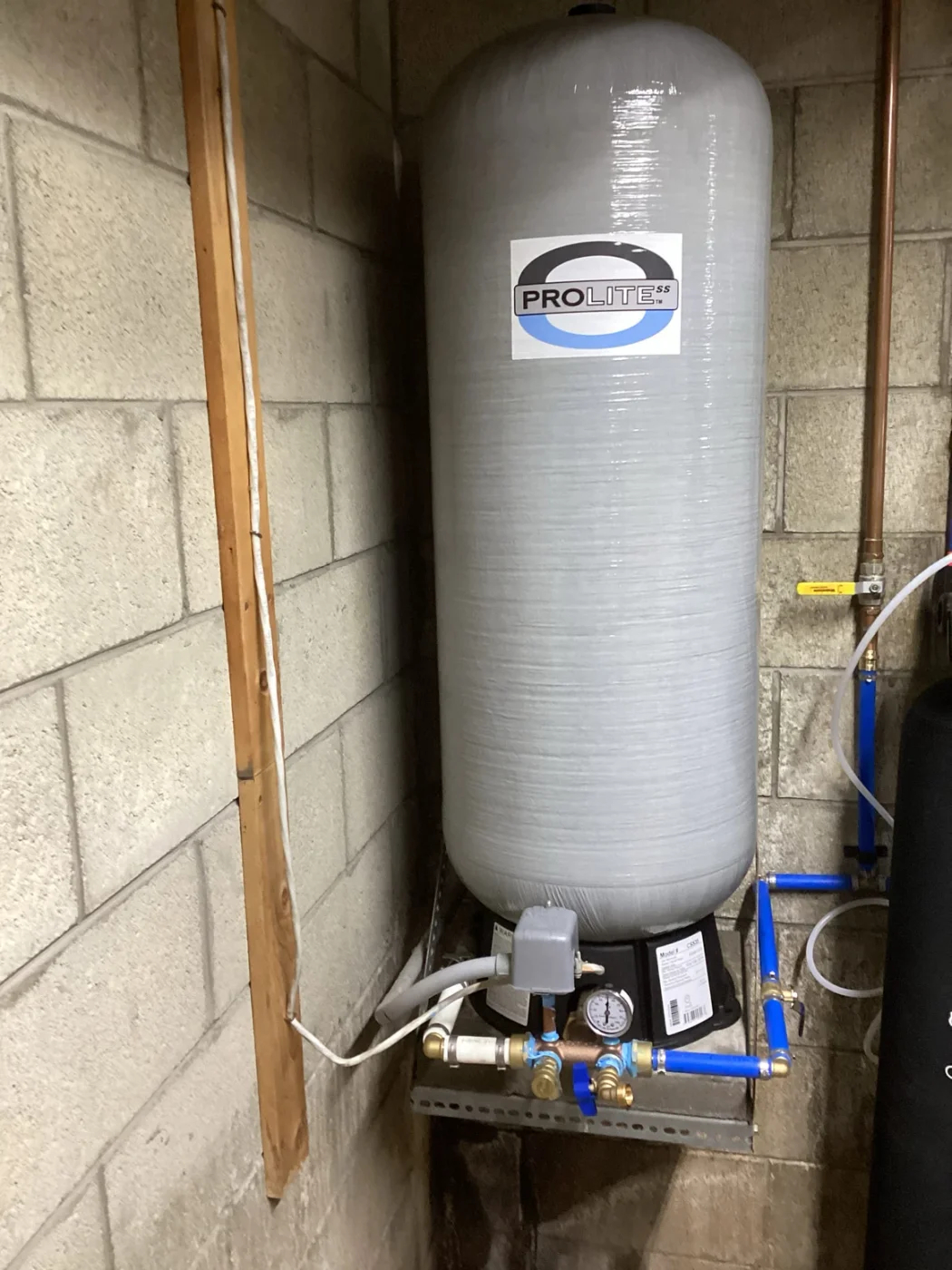
Pressure tanks.
The tank is what lets the pump rest. Waterlogged tanks, short cycling, and the fix.
 WELL PUMPS
The little gray box that runs it all.
How a pressure switch works, what cut-in and cut-out mean, and when to upgrade to a controller.
 FIELD NOTES
Top signs your well pump needs repair.
Fluctuating pressure, strange noises, air in the lines, a higher bill: what each one points to.

YOUR NEXT STEP
No Water?
Let’s Find the Cause.
If you’re seeing any of these signs, don’t wait. We’ll diagnose the issue, recommend the best course of action, and make sure your pump keeps delivering the water you depend on.