
WATER TREATMENT · WESTERN PA & NORTHEAST OHIO
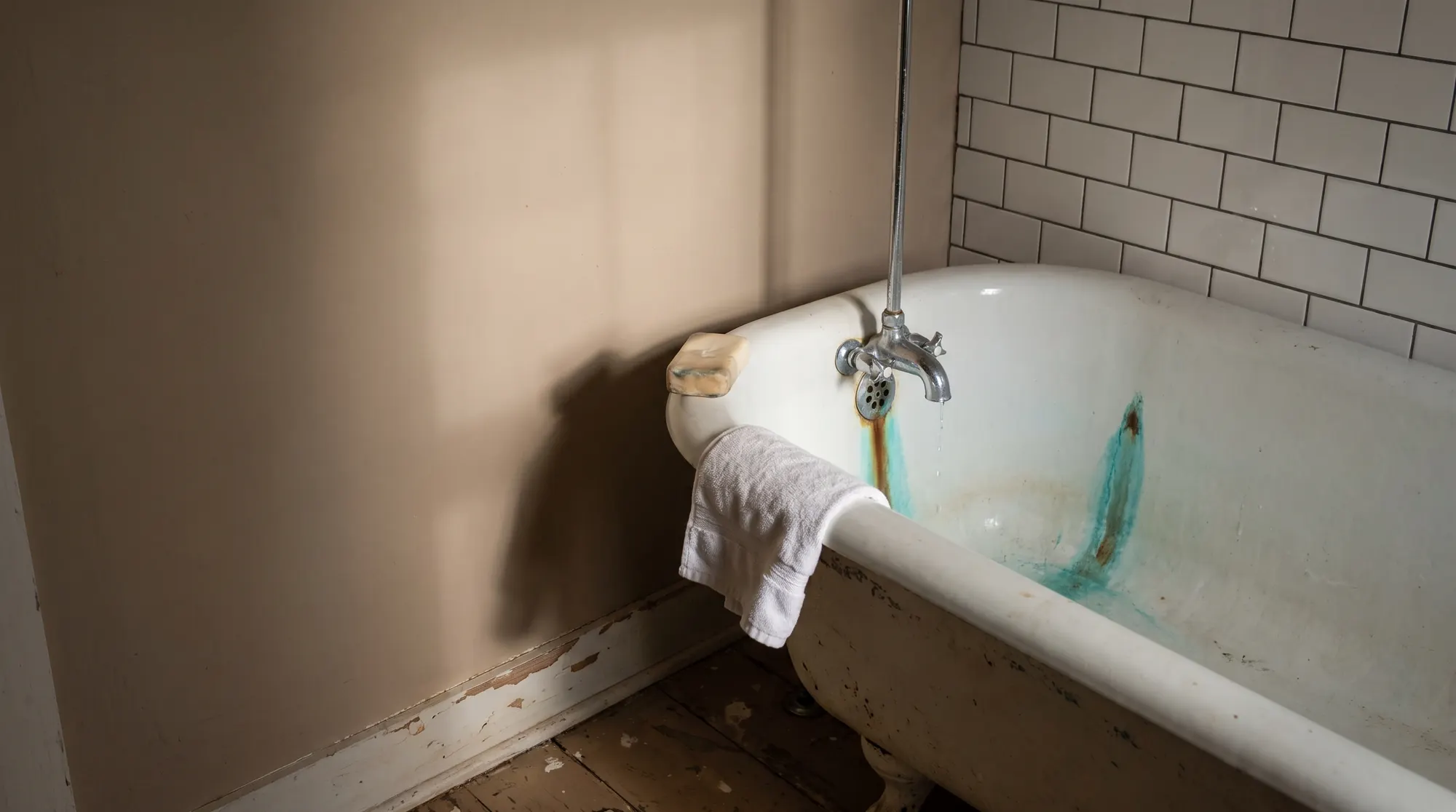
The stain is blue-green, but the water isn’t. It is dissolving your copper, and a neutralizer at the point of entry raises the pH before the water meets a pipe.
Serving our communities since 1967
Low-pH water does not stain anything by itself. It dissolves copper from the plumbing a little at a time, and the blue-green stain is where that copper lands. The neutralizer works on the cause; everything downstream of it stops corroding.
Schedule a water test- 01Calcite, in a tankWater passes up through a bed of calcite (calcium carbonate). Acidic water dissolves a little of it as it goes, and the dissolved mineral raises the pH into the EPA range before the water reaches a pipe.Copper stops dissolving; the stains stop forming
- 02Sized from pH and alkalinityHow low the pH sits and how little buffering the water carries decide the media blend and the tank size. Very low pH gets calcite blended with magnesium oxide, which works faster.A tank sized to neutralize at the flow your house uses
- 03First in lineThe neutralizer goes ahead of an iron filter or a softener, because that equipment needs water that is not corrosive. What it adds is a few grains of hardness, so a softener follows it when the test calls for one.What follows it is spared corrosion
- pH below 6.5The EPA’s secondary line. Below it the water is corrosive to copper and brass; the further below, the faster.
- AlkalinityHow much buffering the water carries. Low alkalinity with low pH means the media has more work to do.
- Hardness and ironDecide what follows the neutralizer: a softener for the grains it adds, a FerronX where the iron is already there.
- WHAT IT CHANGES
- No new blue-green stains under the drips
- Copper pipe and brass fixtures stop thinning from the inside
- The metallic, sour edge leaves the taste
IS THIS YOUR WATER?
The Signs of
Acidic Water.
Low pH is invisible in a glass. It shows up on the fixtures, in the plumbing, and on a test report, in that order.
HOW A NEUTRALIZER WORKS
Dissolve a Little Mineral.
Save a Lot of Copper.
One tank, one job: the water leaves it no longer able to eat the plumbing.
- 01
Acidic water in
Rain is slightly acidic, and where the ground has no limestone to buffer it, the well comes up below pH 6.5. Sandstone, shale, and glacial sand let it through that way; limestone and dolomite do not.
- 02
Up through the calcite
The neutralizer is a tank of calcite, crushed calcium carbonate, that the water passes through. The acid dissolves a little of the mineral, and the dissolved mineral raises the pH.
- 03
Backwash and top-up
The media bed is backwashed on a schedule to keep it loose and clean, and because the water consumes calcite as it works, the tank is topped up, usually once a year.
- 04
Neutral water out
Water in the EPA range continues to the iron filter, the softener, the water heater, and every pipe, none of which it is dissolving anymore.
ACID NEUTRALIZERS · LOW pH
Acidic Water Treatment for
Western Pennsylvania and Northeast Ohio.
Water with a pH below 6.5 is corrosive. It does not stain anything on its own; it dissolves copper from the pipes, brass from the fixtures, and lead from old solder, a little with every gallon, and the blue-green stain under a dripping tap is where the copper lands. The fix goes at the point of entry, where a neutralizer raises the pH before the water reaches the first fitting.
Why some wells run acidic
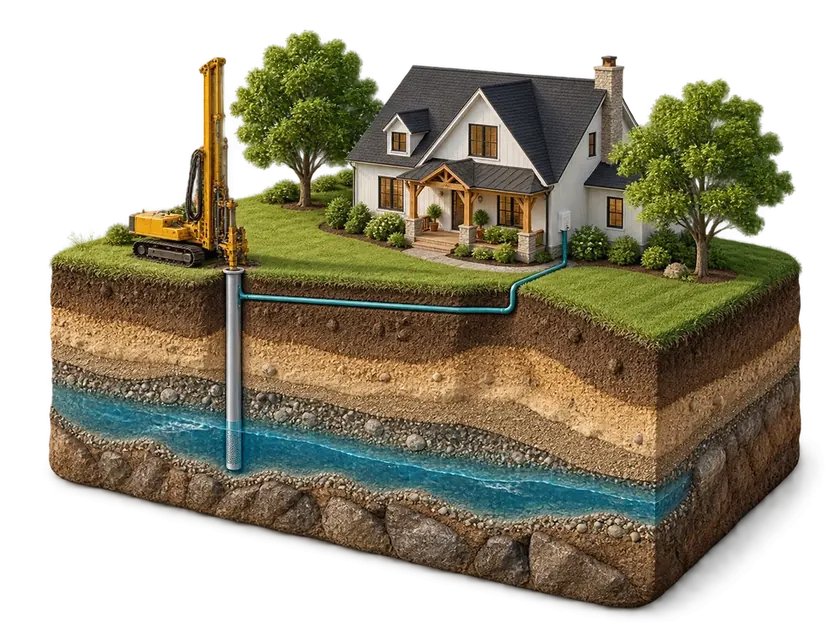
Rain is naturally a little acidic. Where it soaks through limestone or dolomite on its way to the water table, the rock neutralizes it and the well comes up in the EPA range. Where the ground is sandstone, shale, or glacial sand and gravel, nothing buffers it, and the well delivers the rain about as it fell. Both kinds of ground sit under our counties, sometimes on the same road, which is why the number comes from your own test.
What the county record shows
The USGS sampled wells in most of our counties, and the share below the 6.5 line varies by county:
- Mercer County, PA: 9% of 96 wells
- Crawford County, PA: 4% of 28 wells
- Venango County, PA: 60% of 5 wells
- Erie County, PA: 4% of 208 wells
- Lawrence County, PA: 0% of 27 wells
- Butler County, PA: 13% of 15 wells
- Ashtabula County, OH: 8% of 48 wells
- Trumbull County, OH: 12% of 24 wells
- Mahoning County, OH: 0% of 7 wells
- Columbiana County, OH: 0% of 14 wells
Treat these as the regional pattern. A few dozen wells over several decades show that low pH is ordinary here, and only a test shows whether your well is one of them.
The neutralizer, and where it goes
A neutralizer is a tank of calcite, crushed calcium carbonate, blended with magnesium oxide for very low pH. Water passes up through the bed, dissolves a little of the mineral, and leaves neutral. It is sized from the pH, the alkalinity, and the flow the house needs, and it is backwashed on a schedule to keep the bed loose. Because the water consumes the media, the tank is topped up, usually once a year. It goes first in the sequence: an iron filter or a softener needs water that is not corroding it, and the few grains of hardness the calcite adds are the softener’s to take out afterward.
What it does not do
A neutralizer does not remove iron, sulfur, bacteria, or dissolved contaminants; it removes the acidity that was carrying copper to your tap. Where the test finds the rest, the equipment for them follows it in order. And it does not undo a leak that has already started: a pipe thinned to a pinhole is a plumber’s job, and the neutralizer is what keeps the next one from forming.
Serving Western PA and Eastern OH
Neutralizers, sized from the test, across ten counties:
HOW WE FIX ACIDIC WATER
Test First.
Then Size the Tank.
Two numbers, pH and alkalinity, size the neutralizer. Our water test reads both.
- 01
Test your water
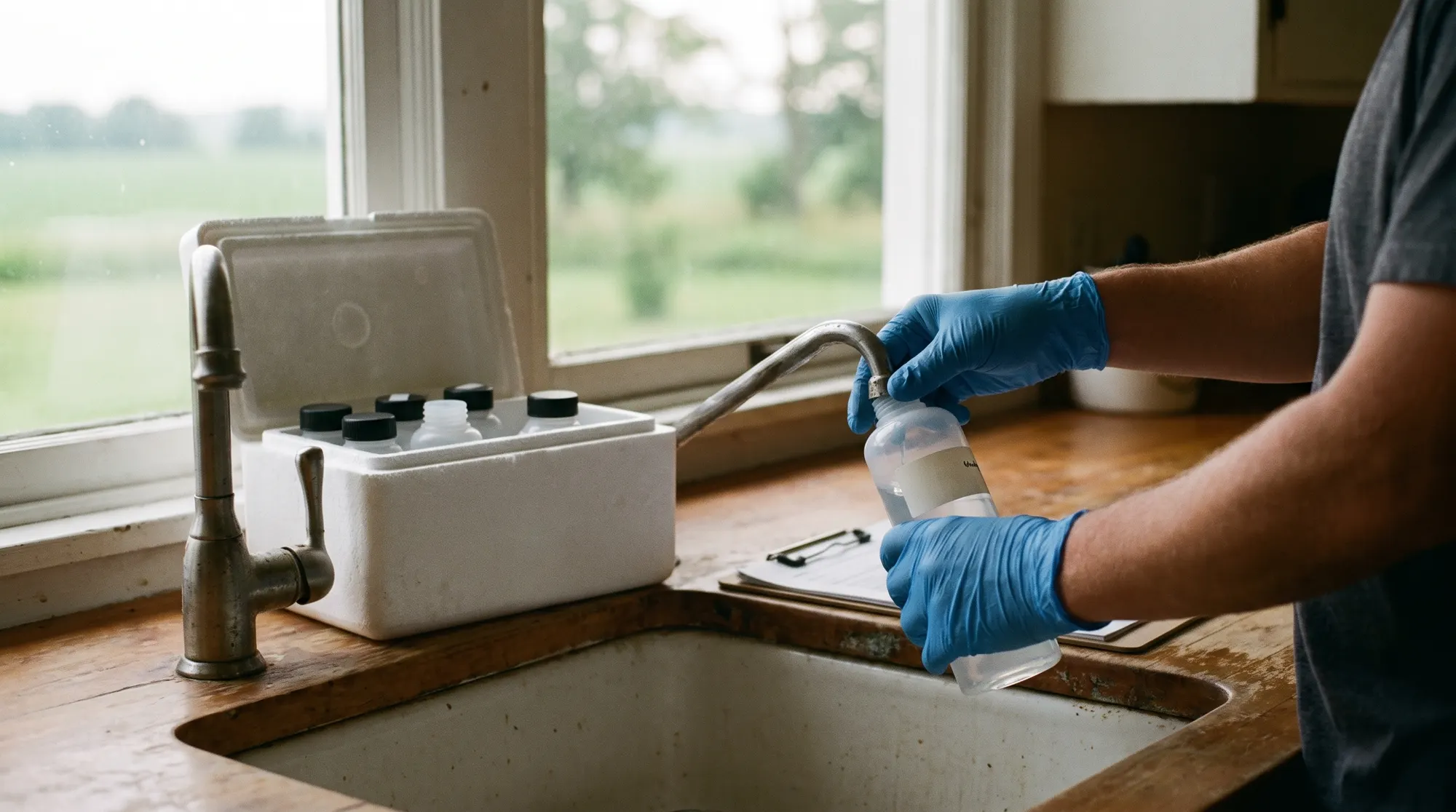
pH and alkalinity at the tap, plus hardness and iron, because they decide what follows the neutralizer. Copper at the tap after the water has stood overnight, when the stains say so.
- 02
Assess your space
Where the water enters, whether there is a drain for the backwash, and where the neutralizer sits so the equipment after it gets water that is not corrosive.
- 03
Review results & quote
The media blend and tank size from your pH and flow, the sequence it belongs in, and a clear quote before anything is scheduled.
- 04
Install & verify
Installed by the Chatfield crew, backwashed and run through its first cycle, with the pH checked at the tap and the top-up interval written down.
A LITTLE CLARITY
Neutralizer Questions.
Straight Answers.
What is an acid neutralizer?
A tank of calcite, crushed calcium carbonate, that water passes through at the point of entry. Acidic water dissolves a little of the mineral as it goes, and the dissolved mineral raises the pH into the EPA’s range before the water reaches a pipe. For very low pH the calcite is blended with magnesium oxide, which works faster. It is sized from the pH, the alkalinity, and the flow on your test.
How do I know my water is acidic?
The stains usually show it first: blue-green marks in tubs and sinks where a tap drips, and green on brass. Pinhole leaks in copper pipe come later. A test confirms it as a pH below 6.5, and our water test includes pH. A test after the water has stood in the pipes overnight also reads the copper the acid has picked up.
Will a neutralizer make my water hard?
A little. Calcite is calcium carbonate, and what it adds to the water is hardness, typically a few grains per gallon. On a well that was soft to begin with it rarely matters; on one already in the hard range, a softener follows the neutralizer in the sequence, never the other way around, because a softener needs water that is not corroding it.
Why is acidic water common in Western PA and Northeast Ohio wells?
Because of what the wells are drilled through. Where the rock is limestone or dolomite, the water is buffered on its way down and arrives neutral or alkaline. Where it is sandstone, shale, or glacial sand and gravel, nothing neutralizes the rain’s natural acidity, and the well delivers it as it fell. Two wells on the same road can differ, which is why the number comes from your test and not the county.
What maintenance does a neutralizer need?
A backwash on a schedule, which the valve does on its own, and a media top-up when the calcite level drops, usually once a year and more often on very acidic water. The annual well checkup covers both, and the top-up interval is written on the tank at the install.
Can I just replace the copper with plastic?
You can stop the leaks that way, and some homes do when they repipe. It does not change the water: the acidity still reaches brass fixtures, the water heater, and any copper left in the walls, and it still carries dissolved copper to the tap. The neutralizer fixes the cause; a repipe treats one of its effects.
Talk with the Chatfield team.
(724) 588-2652A LITTLE KNOWLEDGE GOES A LONG WAY
Know Your Water.
 WATER PROBLEMS
Blue-green stains from acidic water.
What low pH does, where it is common in our counties, and how to confirm it.
 WATER TREATMENT
Iron and metal removal.
What often follows a neutralizer: the FerronX, for the iron the same wells carry.
 WATER TESTING
Water testing, explained.
What a test measures, what the results mean, and what happens next.
YOUR NEXT STEP
Stop the Corrosion
at the Source.
Call or fill out the form to schedule your water test. We’ll read the pH, size the neutralizer to it, and put it first in line.