

WATER PROBLEMS · WESTERN PA & NORTHEAST OHIO
Grit in the glass, an aerator that clogs every month, water that runs grey. Sediment is a well problem as often as a water problem, and a glass on the counter tells you more than you’d think. A test settles it; the Alluvium filters it.
Serving our communities since 1967
- Faucet aerators and shower heads that clog again a month after they were cleaned
- Grey, cloudy, or milky water, especially on the first draw of the morning
- A gritty or sandy texture; particles that settle at the bottom of a glass
- Sediment collecting in the water heater and the washing-machine inlet screens
- Pressure that has fallen off over months, not overnight
Symptoms overlap, and more than one can be true at once. A water test settles it.
Schedule a water testWHAT IT IS
Sand, Silt, and Clay,
Riding in with the Water.
Sediment enters the water from the geological formations around the well. Sand, silt, clay, and other fine particles make their way in through the well casing, especially in older wells and in areas with softer rock, and the problem tends to get worse over time as particles accumulate in the plumbing and the appliances.
Not every cloudy glass is sediment, though. Air from a pump or pressure tank clouds water and clears in a minute. Dissolved iron and manganese, invisible when drawn, turn a glass hazy and then orange or brown as they meet air. And sediment that is really there can be the well’s fault rather than the water’s: a worn screen, a pump set too close to the bottom, or an aquifer stirred by a week of rain. The fix depends on the cause, so the first step is a glass on the counter rather than a filter.
How to confirm it
Fill a clear glass, let it stand, and watch it for a few minutes; the card below reads the result. Clean an aerator and keep what it caught in a small container. Then schedule the test. It measures turbidity, identifies the type and volume of sediment, and screens for the iron, manganese, and bacteria that turbid water carries with it.
- 01Clears from the bottom up within a minute or twoAir. Thousands of tiny bubbles from a pump or pressure tank drawing air in. Harmless to drink; worth a service check so the cause is not a failing part.
- 02Particles drop straight to the bottomSediment: sand, silt, or clay coming through the well screen or casing, or stirred up by rain, flooding, or work nearby. The Alluvium is built for it.
- 03Stays hazy, or turns orange or brown as it standsDissolved iron or manganese meeting air. A metals problem wearing a sediment costume; it needs the iron system, not a particle filter.Its own page
- 04Cloudy or gritty at the hot tap onlyThe water heater’s own sediment, settled in the tank over years. Not the well; note it for the service call and do not drain the tank yourself.
- What settlesSediment is judged by the glass, by what the aerator catches, and by the panel’s turbidity reading. The filter is sized to the particle, from fine silt to coarse sand.
- What else is in itTurbid water can carry bacteria and metals with it, so the same visit screens for both rather than stopping at the grit.
- WHAT SEDIMENT FILTRATION CHANGES
- Aerators and shower heads stop clogging
- Clear water in the glass, first draw of the morning included
- Valves, the water heater, and appliances stop grinding on grit
WHERE IT COMES FROM
Five Ways Grit
Gets into a Glass.
The particle looks the same in every case. The fix does not: two of the five are filtration jobs, two are well jobs, and one is a plumber’s. The test and a look at the well decide which.
- 01
The formation itself
Sand, silt, and clay from the gravel or soft rock the well draws from get carried in through the casing. It is common in older wells and softer formations, and it is the case a whole-home filter is built for.
- 02
A worn or torn well screen
The screen at the bottom of the well is what keeps the formation out. When it corrodes or tears, sand comes through in quantity. A screen replacement, not a filter, is the fix.
- 03
A pump set too low
A pump drawing from the very bottom of the well pulls up whatever has settled there. Resetting the pump depth stops it, and often improves the pump’s life as well.
- 04
The ground disturbed
Heavy rain, flooding, blasting, construction, or well work nearby can stir the aquifer for days or weeks. Note the date; if it does not clear, something at the well needs a look.
- 05
The water heater
Years of sediment settle in the tank and come out on hot water only. That is not the well, and not a job to do yourself; note it for the service call and leave the drain valve alone.
Everything here can be observed by looking at water and fixtures. Do not remove the well cap, open a pressure tank or pump control, or take apart filtration equipment to investigate; a private well includes energized and pressurized parts, and the observation is enough.
WHAT IT DOES
Grit Is Small.
The Damage Isn’t.
Sediment is easy to dismiss as cosmetic, and the visible part often is minor. Every particle that flows through the pipes is grinding against valves, building up in the water heater, and shortening the life of appliances that were never designed to handle it. It is a reason to raise the problem rather than wait, even when the annoyance is small.
- Fixtures. Aerators, shower heads, and the small screens in faucets clog first, and keep clogging, because the supply keeps delivering.
- Appliances. Washing-machine inlet valves and dishwasher components wear early; ice makers and refrigerator dispensers fail on grit their filters were not built for.
- The water heater. Sediment settles in the bottom of the tank, insulating the burner or element from the water. The heater works harder, runs hotter underneath, and dies sooner.
- Pressure and flow. A slow loss of pressure across the house is often sediment narrowing the path, at the fixtures and inside any filter already installed.
- The next system. A sediment filter goes in first in any sequence, because a softener, an iron system, or a UV lamp fouled with grit stops doing its own job.
Before you call, note four things
Note what the particles look like and whether they settle or stay suspended. List every fixture affected and every one that is not, whether it is cold water, hot water, or both, and when it started and what changed around then, with dates. Keep what the aerator caught. None of it is a diagnosis, and all of it makes the test and the conversation shorter.
THE FIX
Filter the Particle,
or Fix the Well.
When the formation is the source, a whole-home filter at the point of entry stops the grit before the first fixture. When the well is the source, the well gets fixed first, or the filter clogs on the well’s behalf.
- ALLUVIUM SEDIMENT SYSTEM
Whole-home particle filtration.
Captures sand, silt, clay, and debris before they reach plumbing, fixtures, and appliances, and protects everything downstream: the water heater, the washing machine, the dishwasher, every faucet. It is sized to the particle from the test, and it is one of the most commonly stocked systems on the truck, so same-day installation is available in most cases.
How sediment filtration works - THE WELL SIDE
Screen, pump depth, or a cleaning.
A torn screen gets replaced. A pump drawing from the bottom gets reset. A well that has silted in, or lost capacity along with its clarity, gets cleaned. Determining which is work for a qualified contractor, and Chatfield does all three.
Well service and cleaning
A LITTLE CLARITY
Sediment Questions.
Straight Answers.
How do you fix sediment in well water?
After investigating the source and severity, Chatfield typically installs the Alluvium Sediment System, a whole-home particle filtration system that captures sand, silt, clay, and debris before they reach plumbing, fixtures, and appliances. It protects everything downstream, including the water heater, washing machine, and dishwasher. It is one of the most commonly stocked solutions, so same-day installation is often available. When the well itself is the source, a screen replacement, pump reset, or well cleaning comes first.
Why is my well water suddenly filled with sediment?
A sudden change is worth reporting rather than diagnosing yourself. Sediment enters from the geological formations around a well, and sand, silt, and clay can reach the water supply through the casing, particularly in older wells or softer rock formations. A recent change may also follow well work, plumbing work, heavy rain, or nearby excavation. Note when it began and what else changed.
Is cloudy well water safe to drink?
Usually the cause is air or sediment, neither of which is a health problem in itself. Cloudiness that starts suddenly, follows heavy rain or well work, or comes with a change in taste or smell deserves a test rather than a guess, because turbid water can carry bacteria and metals with it, and because a cracked casing or a damaged cap that lets sediment in lets other things in too.
Why does my water clear up after it sits for a minute?
That is air, not sediment: thousands of tiny bubbles introduced by the pump or the pressure tank, clearing from the bottom of the glass upward as they rise. It is harmless to drink. It can follow pump repairs, a pressure-tank problem, or a seasonal drop in the water level, so it is worth a service check to confirm nothing mechanical is drawing air in.
What are the signs of sediment in my water?
Clogged faucet aerators and showerheads, grey or cloudy water, a gritty or sandy texture, sediment collecting in the bottom of the water heater, reduced water pressure over time, and premature wear on washing-machine valves and dishwasher components. The visible part is often minor compared with what accumulates in plumbing and appliances.
Will a sediment filter fix cloudy water?
Sometimes, but not always, which is why testing comes first. Cloudiness can come from suspended particles, but it can also be air, or dissolved iron and manganese oxidizing in the glass, and a filter aimed at the wrong issue will not resolve it. Chatfield analyzes the water to identify the type and volume of sediment and to check for additional water quality issues before recommending a configuration.
Talk with the Chatfield team.
(724) 588-2652A LITTLE KNOWLEDGE GOES A LONG WAY
Know Your Water.
 WATER PROBLEMS
Orange stains from your well water.
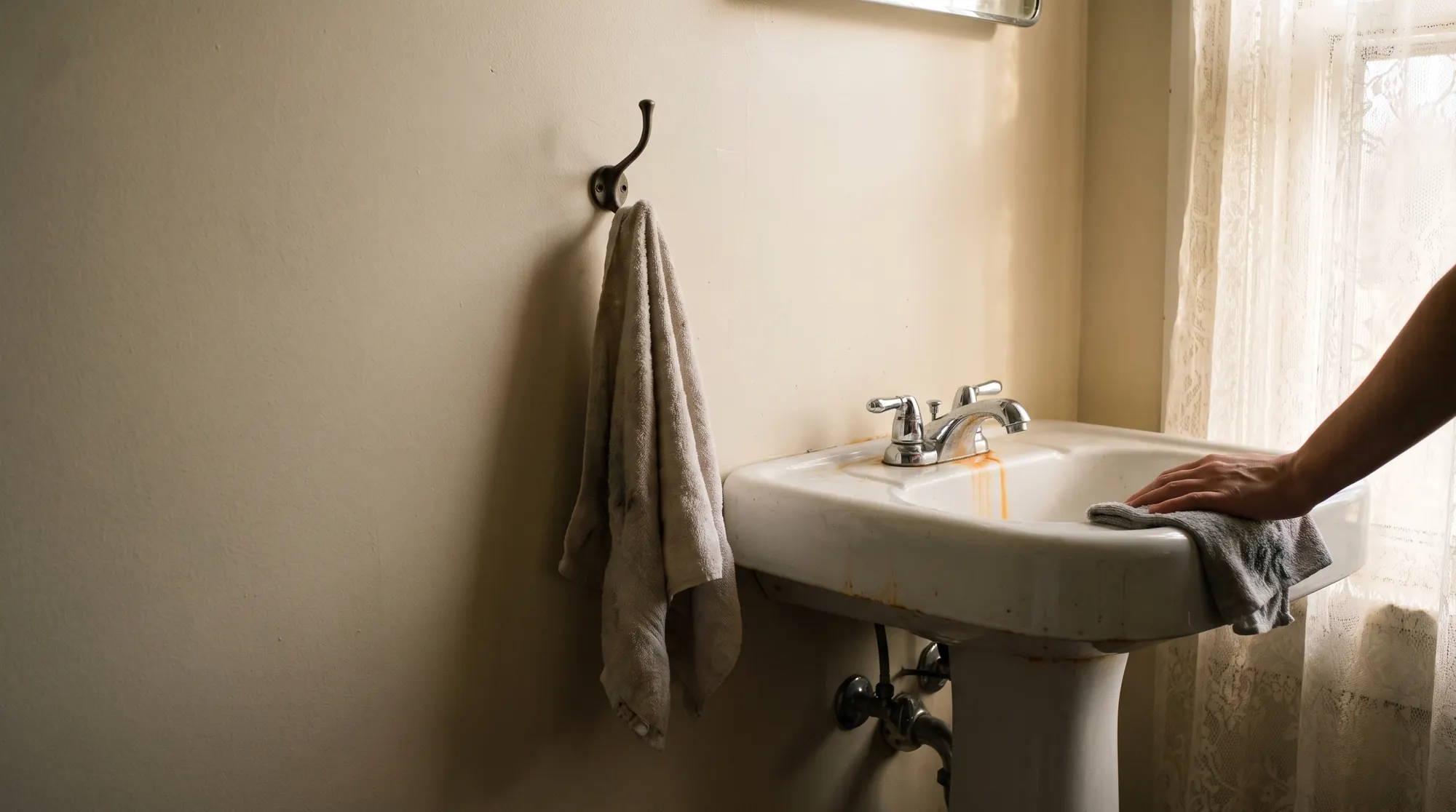
When the cloud in the glass turns orange as it stands, it is iron, and this is its page.
 WATER TESTING
Water testing, explained.
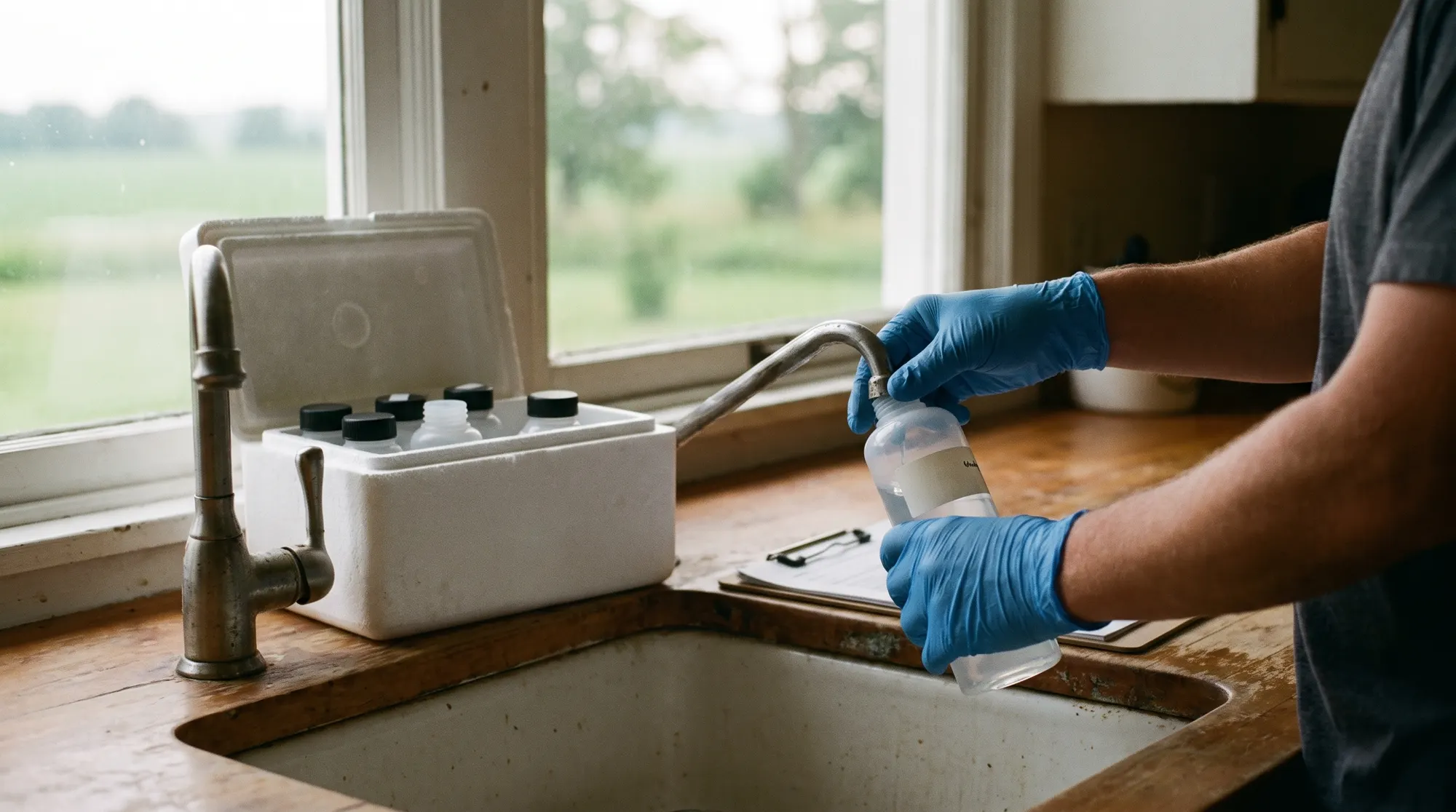
What a test measures, what the results mean, and what happens next.
 WELL MAINTENANCE
Well service and cleaning.
When the grit is the well’s fault: screens, pump depth, and cleaning a well that has silted in.

YOUR NEXT STEP
See What Settles.
Then Fix the Source.
A water test tells us what the particle is, whether the well or the water is putting it there, and what else came in with it. From there, the recommendation is specific to your home.