
WATER TREATMENT · WESTERN PA & NORTHEAST OHIO
A positive test needs a permanent solution, not a one-time shock treatment. The Luminor UV System sanitizes every gallon at the point of entry without chemicals; chlorine injection with retention handles the heavier cases.
Serving our communities since 1967
Both treat every gallon at the point of entry, automatically, around the clock. Which one fits depends on what the lab found and how clear the water is, which is why the test and the inspection come first.
Schedule a water testUV-C light destroys the DNA of bacteria, viruses, and protozoa as the water passes the lamp. Nothing is added, nothing changes in the taste, and it works instantly, with no holding tank. It needs clear water, so a sediment filter goes ahead of it. The lamp is replaced about once a year.
A precisely measured dose of sanitizer goes into the supply and the water is held in a retention tank long enough for contact time to eliminate the bacteria. It is the approach for more severe contamination, or for water with higher turbidity. A carbon filter after it takes the chlorine back out.
- Absent is the only passTotal coliform and E. coli have no acceptable count. A positive result is confirmed with a second sample before anything is installed.
- Turbidity tooCloudy water shields organisms from the light, so the same test decides whether UV can do the job alone.
- WHAT IT CHANGES
- Every gallon sanitized before the first fixture
- No boil notices, no bottled water, no bleach in the well
- The next annual test comes back absent
IS THIS YOUR WATER?
Is There Bacteria
in Your Water?
If a water test has revealed coliform bacteria, E. coli, or other microbial contamination in your well water, or if you’ve received a boil-water advisory, your water needs sanitation treatment.
HOW UV DISINFECTION WORKS
Light, Not Chemicals,
on Every Gallon.
Ultraviolet disinfection destroys bacteria, viruses, and other microorganisms by exposing water to UV light as it flows through the system. Nothing is added, and nothing changes but the count.
- 01
Sediment first
The light has to reach the organism, so a sediment filter ahead of the lamp clears the cloudiness that would shield bacteria from it.
- 02
The UV chamber
As water flows past the lamp, UV-C light destroys the DNA of bacteria, viruses, and protozoa, including Cryptosporidium and Giardia, which chlorine does not affect.
- 03
Nothing added
No chemicals, no byproducts, no change to the taste or smell of the water, and no holding tank: the water is disinfected as it passes, instantly.
- 04
The lamp, once a year
The UV lamp is replaced about once a year, and the system uses about as much energy as a regular light bulb. Every gallon, around the clock, automatically.
WATER SANITATION
UV Systems and
Bacteria Treatment.
Bacteria in drinking water is a serious health risk for your family, and it requires a permanent solution, not just a one-time shock treatment.
What causes bacteria in well water
Bacteria can enter your well through surface water runoff, cracks in the well casing, improperly sealed well caps, or naturally occurring groundwater contamination. Once bacteria are present, they can multiply quickly in the warm, nutrient-rich environment inside your well and plumbing system. The bacteria page covers how to read the result and what to do the day it comes back.
The Luminor UV System
Ultraviolet disinfection is a chemical-free method that destroys bacteria, viruses, and other microorganisms by exposing water to UV light as it flows through the system. The Luminor UV System treats your water at the point of entry: every drop that enters your home is sanitized without adding any chemicals, changing the taste, or leaving any byproducts. Luminor systems are user-friendly and require minimal upkeep; the lamp is replaced about once a year, and the system uses about as much energy as a regular light bulb.
Chlorine injection with retention
For more severe contamination or water with higher turbidity, we install a Chlorine Injection System with Retention. This system precisely injects a measured amount of sanitizer into your water supply and holds it in a retention tank, giving it enough contact time to eliminate bacteria completely.
A shock treatment isn’t a long-term solution
Well shocking, pouring bleach into your well, can temporarily reduce bacteria, but it doesn’t prevent them from coming back. If your water tests positive for bacteria, you need a permanent point-of-entry system that treats every gallon of water that enters your home, around the clock, automatically. The way the bacteria got in, whether a cap, a casing that ends below ground, or a flooded pit, gets closed at the same time. Otherwise the lamp is doing the well’s job forever.
Serving Western PA and Eastern OH
We install water sanitation systems for homeowners across ten counties:
HOW WE SOLVE YOUR BACTERIA PROBLEM
Test First.
Then Choose the System.
Concerned about bacteria in your water? A lab test is the only way to know for sure.
- 01
Test your water
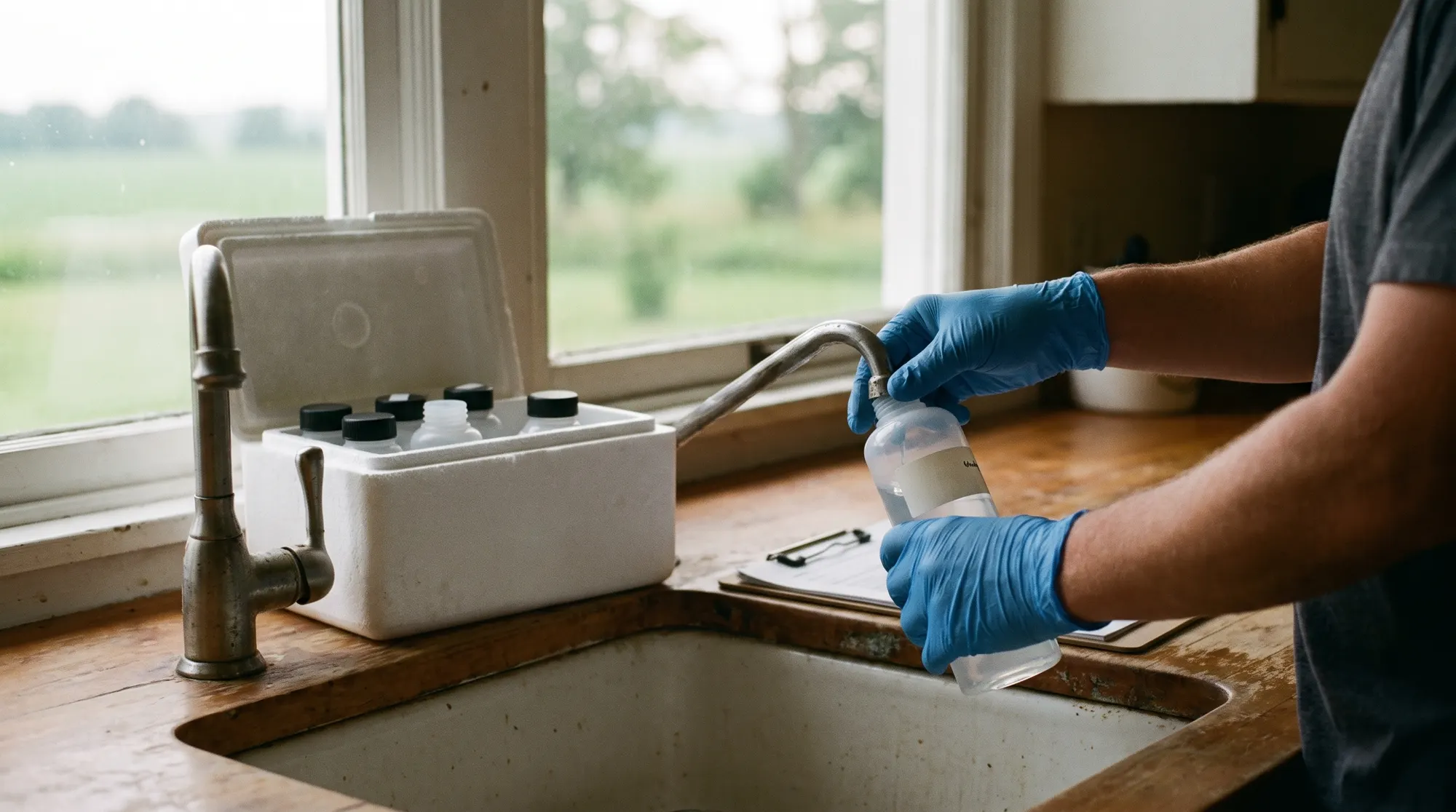
We collect water samples and send them to a certified lab for comprehensive bacterial analysis.
- 02
Assess your space
We inspect your well, plumbing, and installation area to determine the best sanitation approach.
- 03
Review results & quote
Based on the type of contamination and your home’s setup, a Luminor UV System or a Chlorine Injection System, with a transparent quote.
- 04
Install
We install your sanitation system and verify it’s working correctly before we leave.
A LITTLE CLARITY
Sanitation Questions.
Straight Answers.
What should I do if my well tests positive for coliform?
Ask the laboratory that produced the result, a qualified water professional, or your local health authority about interim precautions and whether a confirmation sample is advised. Then write down recent events at the property, such as flooding, recent well work, or nearby excavation. Bring the report and those notes to a professional conversation rather than acting on a general recommendation.
How do you treat coliform bacteria in well water?
Treatment follows testing and inspection. Chatfield installs a Luminor UV system, which uses ultraviolet light at the point of entry to treat water without adding chemicals or changing taste, or a chlorine injection system with retention, which injects a measured amount of sanitizer and holds the water long enough for contact time. The choice depends on the type of contamination and the home’s setup.
Is a one-time shock chlorination enough?
Not necessarily. Shock chlorination is a recognized well service, but treating it as a cure-all can be a mistake. It may temporarily address taste and odor problems while leaving behind debris and accumulated organic material, and if a condition is allowing bacteria into the system, a single treatment does not change that condition. Testing and inspection determine the appropriate response.
How does bacteria get into a well?
Bacteria can enter through surface water runoff, cracks in the well casing, improperly sealed well caps, or naturally occurring groundwater contamination. Warning signs that warrant testing include positive coliform or E. coli results, cloudy water with no clear sediment source, an unusual taste or odor, or recent flooding, well work, or nearby excavation.
Does UV work on Giardia and Cryptosporidium?
Yes. UV-C light destroys the DNA of bacteria, viruses, and protozoa alike, and it works on Cryptosporidium and Giardia, which are not affected by chlorine. That is one reason a UV system is the usual choice where the water is clear; where turbidity is high, the light cannot reach everything, and chlorine injection with retention takes over.
How often does a UV lamp need replacing?
About once a year. The lamp dims before it fails, so it is replaced on schedule rather than when the light goes out, usually at the same visit as the annual water test and the sediment prefilter service. The system uses about as much energy as a regular light bulb.
Talk with the Chatfield team.
(724) 588-2652A LITTLE KNOWLEDGE GOES A LONG WAY
Know Your Water.
 WATER PROBLEMS
Bacteria in your water?
How to read a coliform result, what to do the day it comes back, and where bacteria get in.
 WELL MAINTENANCE
Well service and cleaning.
Caps, casing extensions, and chlorination: closing the door before the lamp goes on.
 WATER TESTING
Water testing, explained.
What a test measures, what the results mean, and what happens next.

YOUR NEXT STEP
Safe Water Starts
with a Lab Test.
Call or fill out the form to schedule your water test. A certified lab reports the result, and the system, UV or injection, follows what it found.