If you’re buying a home or building on a rural property in Crawford County, Pennsylvania, one of the most consequential decisions you’ll make is how you’ll get your water. Two options exist: connect to a municipal water system if one runs near your property, or install a private drilled well.
Both deliver water to your tap, but the similarities end there. The impacts, quality, maintenance responsibilities, and long-term experience are quite different—and the right choice depends heavily on your specific property, plans, and priorities.
Here’s an honest comparison from a company that has been drilling wells across Crawford County and western Pennsylvania for years.
How Each Water Source Works
Municipal water is delivered through a network of pipes owned and maintained by a city, township, or authority. Water is drawn from surface sources (rivers, lakes, reservoirs) or public wells, treated at a central facility, and distributed to connected properties. You pay for what you use through metered billing, plus monthly base charges that cover infrastructure maintenance.
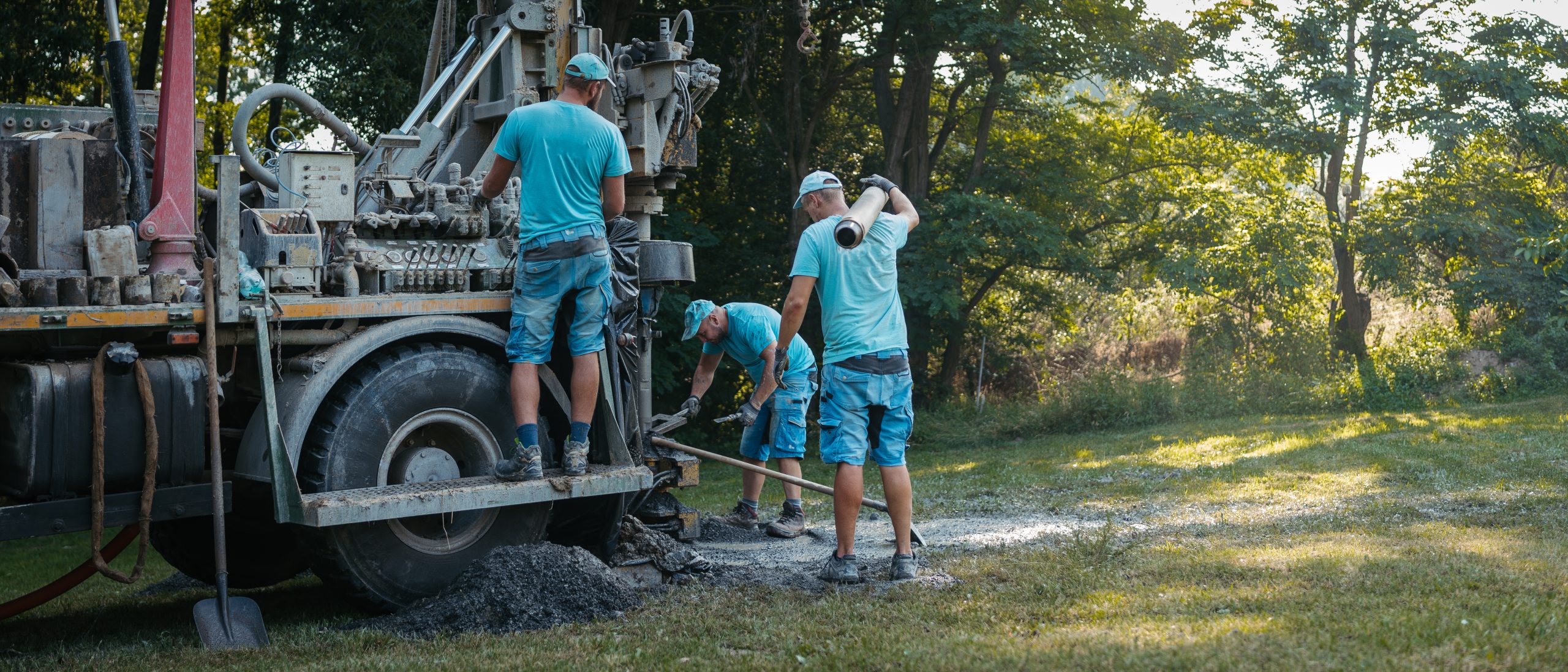
Private well water is drawn directly from a groundwater aquifer beneath your property. A submersible pump moves water from the well into a pressure tank inside your home, where it’s distributed through your plumbing. You own the system entirely—the well, the pump, the pressure tank—and bear all maintenance and repair impacts. There’s no meter and no monthly water bill.
In rural Crawford County, municipal water isn’t available in most areas. Properties in Meadville and a handful of boroughs have access to public water, but the vast majority of the county—including agricultural areas, wooded parcels, and properties along the county’s many lakes—rely on private wells. If you’re buying rural, you’re almost certainly buying well water.
impact Comparison Over Time
This is where the calculation gets interesting—and where most people are surprised by the numbers.
Upfront impacts for a private well:
Ongoing impacts for a private well:
Municipal water impacts in Pennsylvania:
Water Quality Differences
This is a nuanced topic, and the honest answer is: it depends on where you are.
Municipal water is treated and must meet EPA Safe Drinking Water Act standards. Your water utility publishes an annual Consumer Confidence Report (CCR) detailing what was found and how it was treated. Treatment typically includes chlorination, pH adjustment, and sometimes fluoridation. The downside: chlorine taste, occasional disinfection byproducts, and the reality that the standards—while legally compliant—aren’t always as pristine as people assume.
Private well water is untreated at the source. It reflects the local geology and any surface influences on the aquifer. In Crawford County, common water quality issues include iron and manganese (from the bedrock), hardness, and occasionally bacteria following heavy rain events. The upside: no chlorine, no fluoride (if you prefer), and no treatment byproducts. With appropriate filtration, private well water can be exceptionally clean—some of the best-tasting water we’ve encountered comes from bedrock wells in this region.
The key difference is responsibility. Municipal water is someone else’s problem until it reaches your meter. Well water quality is entirely your responsibility to monitor and manage. Annual testing is essential.
Maintenance Requirements
Municipal water: Your responsibilities are minimal—pay the bill, maintain your interior plumbing, and call the utility if pressure or quality issues arise. The infrastructure outside your home is their problem.
Private well: You own everything, which means you maintain everything. Here’s a realistic maintenance checklist for western PA well owners:
- Annual: Test water quality (bacteria, nitrates, pH, iron at minimum); inspect wellhead and cap for damage or insects
- Every 3–5 years: Have a professional inspect the pump system and pressure tank; check well casing integrity
- As needed: Replace pump (typically 10–15 year life), pressure tank (15–20 years), and treatment media
- After events: Test after flooding, nearby construction, or changes in water appearance/taste/odor
None of this is burdensome if you stay on schedule. The problems arise when maintenance is deferred—particularly bacterial contamination that goes untested for years.
Which Is Right for Your Property?
Here’s a practical decision framework for Crawford County buyers:
Choose municipal water if: Your property is in or immediately adjacent to a borough or developed area where connection impacts are reasonable; you want a low-maintenance, hands-off water supply; or you’re purchasing an investment property where simplicity matters.
For most rural Crawford County properties, the well isn’t a choice—it’s the only option. In that case, the better question becomes: how do I make sure my well water is clean, reliable, and well-maintained? That’s where Chatfield Drilling comes in.
If you’re purchasing a property with an existing well, we can inspect the system, test the water, and give you an honest assessment of its condition and remaining life. If you’re building new, we’ll drill the well right the first time—proper depth, proper casing, proper grouting—so you’re not dealing with problems five years from now.
FAQ
Q: Is well water safe to drink in Crawford County?
A: Yes, when properly maintained and tested. The most common issues—iron, hardness, and bacteria—are all treatable. The risk comes from wells that haven’t been tested in years or that were improperly constructed. If you’re moving into a home with an existing well, test the water before drinking it, especially for bacteria and nitrates.
Q: Can I switch from a well to city water later if I want to?
A: In most cases, yes—if a municipal main is accessible. You’d pay a connection service requirement and abandon (properly cap) the existing well. However, in most of rural Crawford County, municipal mains don’t run near properties. Check with your local township or municipal authority about availability and impact before assuming a future connection is possible.
Q: What if my well runs dry?
A: True well failure (the aquifer drying up) is rare in Crawford County, which has reliable groundwater recharge. More commonly, “running dry” symptoms are caused by a failed pump, a depleted pressure tank, or a well that was originally drilled too shallow. Our service team can diagnose the problem and determine whether a pump repair or a deeper well is the appropriate solution.
Q: Does well water affect home value?
A: In rural western Pennsylvania, buyers are accustomed to well water and it typically doesn’t negatively affect value—as long as the water quality tests out clean and the system is in good condition. A recent water test and a well inspection report can actually be a selling asset. Problems arise when sellers can’t document the well’s condition.
Have questions about a well on a property you’re considering in Crawford County? The team at Chatfield Drilling is here to help. We offer well inspections, water testing referrals, and new well installations across Crawford, Mercer, Venango, Erie, and Lawrence counties. Learn more about our well drilling services or contact us to talk through your situation with one of our experts.