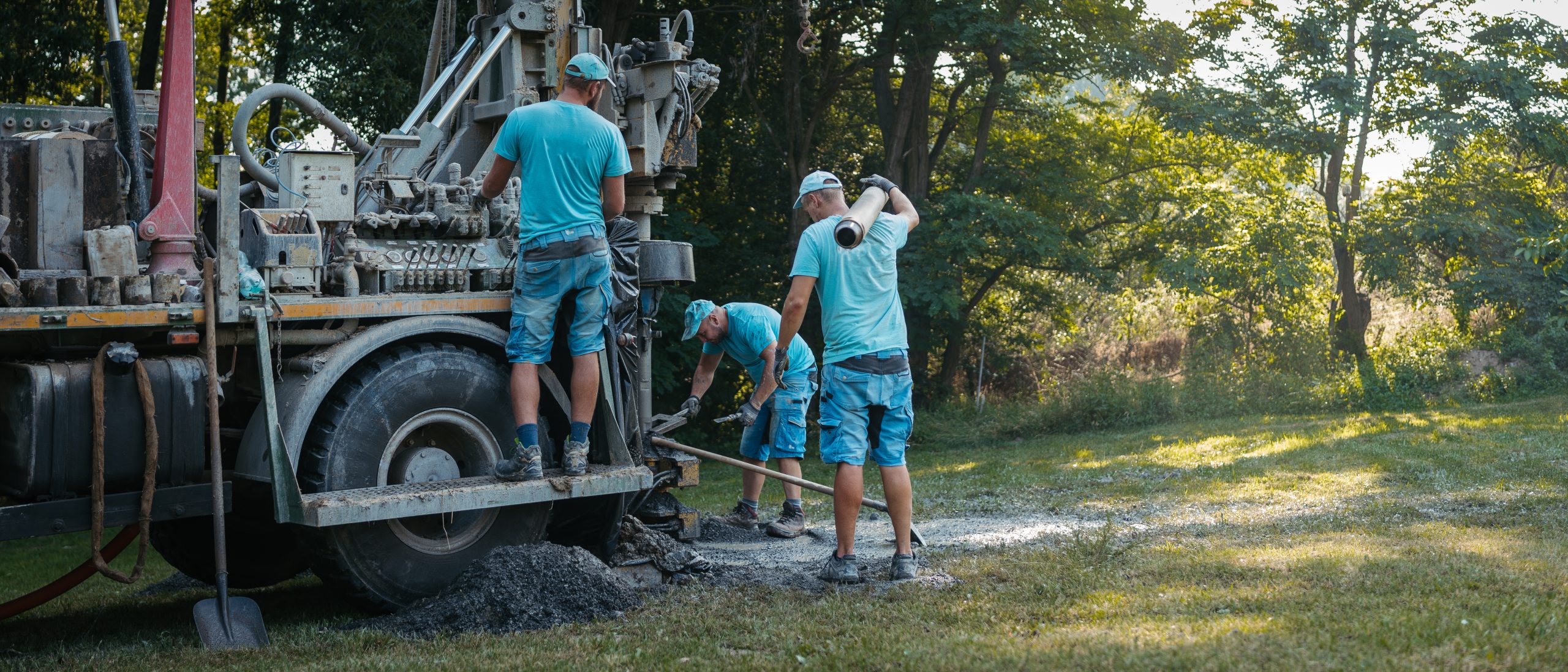
A water-well drilling consultation is the time to compare the needs of a property with the questions that must be answered before work can be planned. Good preparation does not guarantee a particular depth, yield, permit outcome, price, schedule, or drilling feasibility. It does help the conversation begin with accurate property information instead of assumptions.
For property owners in Chatfield Drilling’s Pennsylvania and Ohio service area, a short collection of records, site observations, and water-use goals can make the first discussion more productive. This guide identifies what to gather and what to ask; site conditions, local requirements, and professional evaluation determine what happens next.
Write down the property basics
Start with the property address, parcel information if available, and a simple description of how the property is used. Is it an existing home, a planned residence, a farm, a seasonal property, or a property with another intended use? The drilling team needs to understand the project context, not just the location on a map.
If the property has more than one parcel, driveway, access point, or planned building area, mark that on a sketch. It does not need to be a survey-quality drawing. A simple map that shows the road, existing structures, anticipated building area, and obvious landscape features gives everyone a shared reference for the early conversation.
Do not use the sketch to decide a well location on your own. A proposed spot may need to change after site review, access considerations, local requirements, or other conditions are evaluated. The sketch is information, not a final plan.
Gather available records without treating them as a promise
Bring any records related to existing wells, septic systems, utility lines, prior drilling, water tests, pump service, land surveys, or construction plans. Older documents can be useful even when they are incomplete. They may show where a previous system was located, identify a question that needs further review, or help the team understand the property history.
If you do not have records, say so. Missing paperwork is common and is not a reason to fill in details from memory as though they were verified. The consultation can identify what information needs to be located, confirmed, or evaluated.
For an existing well that is being replaced or assessed, note any known history: when the property acquired it, whether a previous owner provided records, recent service work, changes in water pressure, or recurring water-quality questions. Avoid opening equipment, making electrical changes, or attempting to measure the well yourself to create more data.
Describe the intended water use
Water needs are not identical from one property to another. A household’s expected occupancy, number of bathrooms, laundry use, irrigation plans, livestock, workshop needs, and future additions can all affect the questions a drilling professional asks. Describe what is known today and distinguish it from future possibilities.
For example, a property owner can state that a new home is planned for a certain household size, that a guest space may be added later, or that there is interest in a future garden. Do not turn those intentions into a requested yield or system size before the site and requirements have been evaluated. The purpose is to give the project team context.
It also helps to identify priorities. Some owners care most about supporting year-round residence. Others want to understand options for a seasonal property, a construction timeline, or a property that may change ownership. A clear priority helps guide the conversation without creating an outcome promise.
Think about access before the site visit
Drilling equipment needs a safe route to the work area, but property access can involve more than a driveway. Consider gates, narrow turns, low branches, steep slopes, soft ground, parked vehicles, landscaping, overhead lines, neighboring boundaries, and any construction activity that could affect entry.
Make a list of anything a visitor should know before arriving. Include whether a gate is locked, whether the approach changes after heavy rain, whether there are seasonal access concerns, or whether the owner must coordinate with another person for entry. Do not remove branches, alter grades, move utilities, or change the site solely based on a general article. Ask the drilling team what preparation is appropriate for the actual property.
If access is shared with a neighbor or managed by an association, identify that early. The team may need to understand who can authorize access or what timing restrictions apply.
Identify visible site features carefully
Walk the property only as far as it is safe and familiar. Note existing homes, planned building areas, driveways, sheds, utility markers, septic components you know about, ponds, streams, drainage paths, and locations where water tends to collect. Share these observations during the consultation.
Do not assume that a visible feature determines the well location or that an unmarked area is free of utilities. Locating utilities and evaluating setbacks are project-specific tasks. If there is uncertainty about a line, system, or boundary, identify the uncertainty rather than guessing.
Photos can help, especially when they show access, slope, existing structures, or a feature that may be hard to describe. Date them and note the viewpoint if possible. Avoid photographing or entering areas that are unsafe, restricted, or on someone else’s property without permission.
Prepare questions about process, not predictions
The most useful consultation questions seek clarity about the process. Ask what information the team needs before a proposal can be developed, what site review may involve, which local requirements need to be considered, who handles which steps, and what decisions the property owner may need to make.
You can ask how the team approaches access, drilling, casing, pump selection, testing, and coordination with other work. Phrase questions so they invite a property-specific explanation. “What would you need to review before discussing options for this site?” is more useful than “How deep will the well be?”
Avoid relying on a neighbor’s well depth or a broad regional figure as a prediction for your own property. Nearby wells can have different depths, geology, construction history, and outcomes. A professional should explain what can and cannot be known at each stage.
Keep permitting and local requirements open for review
Private-well projects can involve requirements that vary by location and project condition. A consultation is an opportunity to ask what local, county, state, or other review may apply. Do not assume that a process used on a different property, in a different county, or years ago will be the same for the new project.
Bring any notices, property restrictions, subdivision documents, or planned construction information that may be relevant. If you are unsure whether a document matters, include it in the conversation rather than deciding on your own that it does not.
The project team can explain the part they handle and the information the property owner may need to provide. Keep a written list of follow-up items so responsibilities are clear after the consultation.
Consider the well as part of a larger system
Drilling is only one part of a functioning private water system. Chatfield’s overview of having a well drilled covers the contractor questions worth asking alongside it. A consultation may also include questions about a pump, pressure system, water testing, water treatment, plumbing connections, and future maintenance. That does not mean every component is decided at the first meeting. It means the owner should describe the system goals and ask how the pieces are evaluated together.
If the property has a history of water-quality questions, bring existing test results rather than describing them only in general terms. Do not presume a treatment system is required or that an existing system will address every future result. Appropriate testing and system evaluation guide those decisions.
For a new property, ask when water testing and treatment discussions normally occur in the process. The answer should be specific to the project and current requirements, not a one-size-fits-all instruction.
Choose a single decision-maker and contact path
Projects go more smoothly when the drilling team knows who can answer questions and make timely decisions. Identify the property owner, builder, designer, family member, or other person who will be the primary contact. If more than one person must approve a decision, make that clear early.
Keep communication in one place when possible. A shared email thread or written project note can reduce misunderstandings about documents, access, timing, and next steps. Confirm important decisions in writing rather than relying on a conversation remembered differently by several people.
This is particularly useful when the property is owned by a family, held by an entity, or connected to a construction project with several contractors. Clear contact information is a practical courtesy, not a substitute for project review.
Bring a realistic timeline discussion
It is reasonable to explain any construction, closing, or occupancy deadlines. It is not reasonable to assume that a deadline makes a particular drilling schedule possible. Weather, site conditions, permitting, access, equipment availability, testing, and other work can affect timing.
Ask what milestones should be considered before making commitments to other parts of the project. If a builder needs information, coordinate with the drilling team rather than promising a date based on an estimate from another property.
Writing down the dependencies helps. The owner may need to provide records, arrange access, receive local review, or make a system decision before a later step can move forward. Understanding that sequence is more valuable than a generic calendar promise.
The practical takeaway
A prepared water-well drilling consultation starts with honest property information: available records, intended water use, access details, visible features, questions about process, and a clear contact path. It does not require the owner to know the answer to every technical question. Chatfield Drilling offers residential well drilling and can evaluate the actual property and explain the next steps, helping Pennsylvania and Ohio property owners move forward without guessing at depth, yield, cost, or feasibility.