If you’re building a home, buying rural property, or replacing a failing well in Mercer County, one of the first questions you’ll ask is: how deep does a well need to be drilled? The honest answer is that it depends on your land, your local geology, and which factors water your household uses. But there are reliable patterns for western Pennsylvania that can help you plan and budget.
Chatfield Drilling has been serving Mercer County and the surrounding region for years, and we pull from deep local knowledge—not just textbook geology—when we estimate depths for each job. Here’s what you need to know before you call.
Average Well Depths in Western PA
In western Pennsylvania, residential wells typically range from 100 to 400 feet deep, with the majority of Mercer County wells landing between 150 and 300 feet. That said, we’ve drilled wells as shallow as 80 feet and as deep as 500+ feet depending on the parcel.
Pennsylvania sits on a complex mix of sedimentary rock—primarily sandstone, shale, and limestone formations that vary by county and even by individual parcel. In Mercer County specifically, many properties tap into bedrock aquifers at moderate depths, but there’s no guarantee until the bit goes in the ground.
For comparison, neighboring Crawford County tends to run slightly shallower in its glaciated valley areas, while Venango County properties often require deeper drilling due to the underlying oil-bearing formations that complicate water-bearing zones.
What Affects Well Depth in Mercer County
No two wells are identical. Here are the key variables our drillers assess before putting a rig on your property.
Geology and Aquifer Depth
The most important factor is what’s underground. Mercer County sits in a region where glacial deposits cover much of the surface before giving way to bedrock. Shallow water-bearing zones exist in some areas, but they’re often insufficient or prone to contamination. Most residential wells in the area are drilled into the bedrock aquifer—a more reliable and protected water source.
The depth to productive bedrock varies across the county. Our drilling logs from past jobs in municipalities like Hermitage, Sharon, Grove City, and Stoneboro give us a solid baseline for what to expect in each area. We’ll review those records before providing an estimate for your property.
Property Size and Land Use
Lot size affects where the well can be located relative to septic systems, property lines, and existing structures—but it can also affect depth. On smaller parcels where the well must be sited closer to potential contamination sources, we’ll often drill deeper to ensure the water source is fully protected by impermeable rock.
Agricultural land in Mercer County comes with added considerations. If the land has a history of fertilizer or pesticide application, or if there’s livestock nearby, we typically target deeper aquifer zones to protect water quality long-term.
Water Usage Needs
A deeper well isn’t always a better well, but a well that doesn’t produce enough water for your household is a serious problem. Typical residential well yields in western PA range from 1 to 10+ gallons per minute. We drill to find adequate, reliable yield—not just to hit water.
For a standard 3–4 bedroom home, we recommend a minimum sustained yield of 5 gallons per minute. If you’re planning irrigation, a pool, or livestock watering, that number goes up. We’ll factor your intended usage into the drilling plan from the start.
The Drilling Process Explained
Understanding the process helps you know what to expect on the day of drilling—and why it takes the time it does.
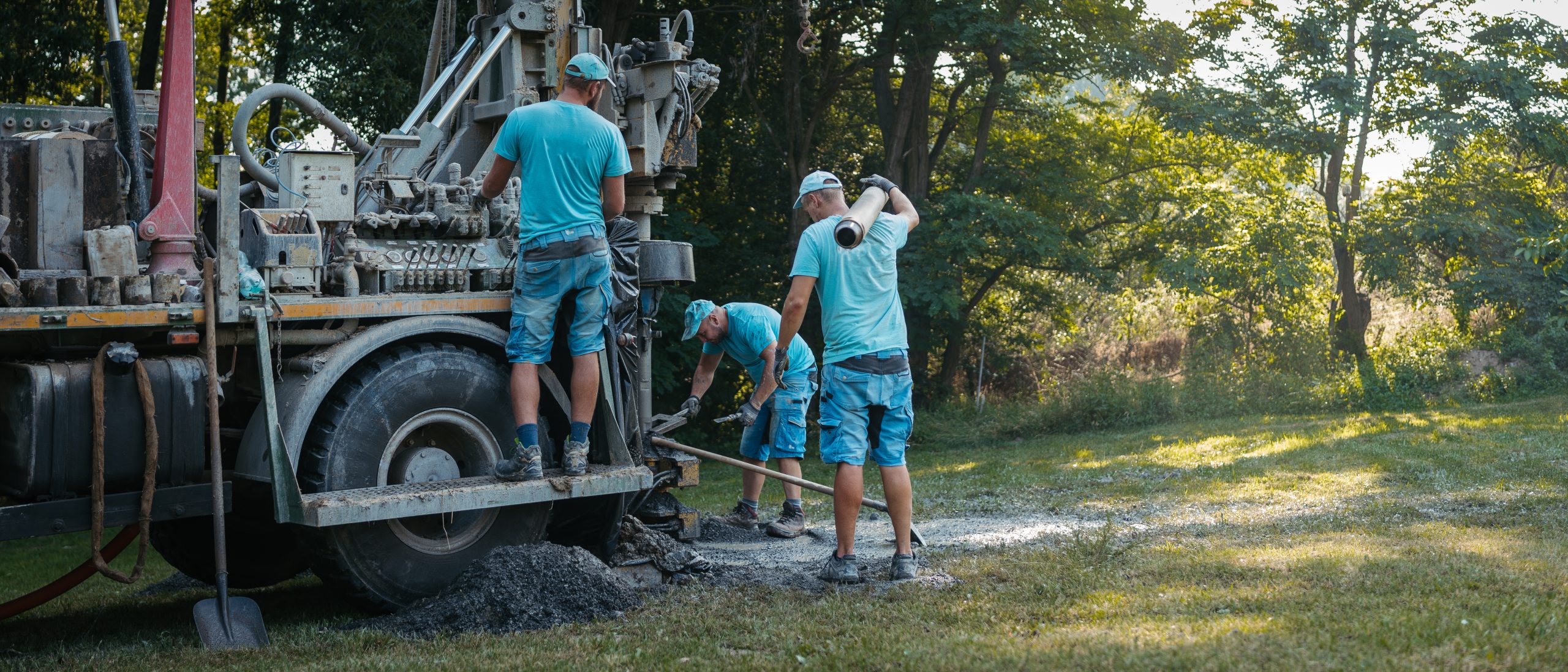
Site assessment. Before any drilling begins, we assess your property for the best well location: uphill from the septic system, away from drainage ditches, with good truck access for the rig.
Surface casing installation. We drill an initial surface hole and install steel casing through the soil and into the bedrock. This casing prevents surface water and contaminants from entering the well. Pennsylvania law requires a minimum 18-foot surface casing depth, though we often go deeper based on site conditions.
Open-hole drilling into bedrock. Below the casing, we drill open-hole into the bedrock formation. As we drill, water enters through natural fractures in the rock. We monitor yield continuously until we reach adequate production and a safe depth.
Well development and testing. Once drilling is complete, we develop the well—clearing fine sediment and evaluating the static water level and recovery rate. We’ll provide you with a driller’s log documenting the geology encountered and the yield test results.
Pump installation. A submersible pump is set at the appropriate depth, and a pitless adapter connects the water line to your home through the well casing. We seal the top of the casing with a vermin-proof cap.
Start to finish, a typical residential well installation takes one to two days of active drilling, plus time for pump setting and pressure tank installation if done at the same visit.
impact by Depth in Pennsylvania
Well drilling in Pennsylvania is planned primarily by the foot, with additional impacts for casing, pump, pressure tank, and any necessary water treatment. Here’s a general framework for Mercer County:
Keep in mind that every job is different. Hard formation, high-iron water requiring immediate treatment, or difficult site access can all affect the final number. We provide detailed written estimates before any work begins.
Pennsylvania does not currently offer statewide rebates for well drilling, but USDA Rural Development loans and grants are available to qualifying rural homeowners. We’re happy to provide the documentation you need to apply.
FAQ
Q: Can I find out how deep my neighbors’ wells are before drilling mine?
A: Yes. Pennsylvania DEP maintains a public Well Log database that shows historical drilling records by township and county. We routinely pull this data for the area around your property before providing an estimate. It’s one of the most useful planning tools available.
Q: What happens if we drill and don’t find enough water?
A: In western PA, this is uncommon in bedrock drilling, but it does happen. If we reach depth without adequate yield, we may recommend hydraulic fracturing (hydrofrac) of the well to open additional fractures and improve production. As a last resort, a second well location may be needed. We’ll walk you through the options and impacts at every step.
Q: Does a deeper well mean better water quality?
A: Not automatically. Deeper wells are generally better protected from surface contamination, but deeper bedrock can introduce different minerals—iron, manganese, hardness—depending on the formation. That’s why we recommend a water quality test after every new well installation, regardless of depth.
Q: How long will a drilled well last?
A: A properly drilled and cased bedrock well in Mercer County can last 50+ years with basic maintenance. The pump typically needs replacement every 10–15 years. The well casing and borehole itself rarely fail if properly installed from the start.
Ready to get started? Contact Chatfield Drilling today for a free well drilling consultation in Mercer County and across western Pennsylvania. Our experienced team will assess your property, pull local drilling records, and give you an honest estimate—no pressure, no surprises. Reach out online or call us directly to schedule. We also serve Crawford, Venango, Erie, and Lawrence counties.